How Does a Bird Learn to Fly? From First Flap to Flight
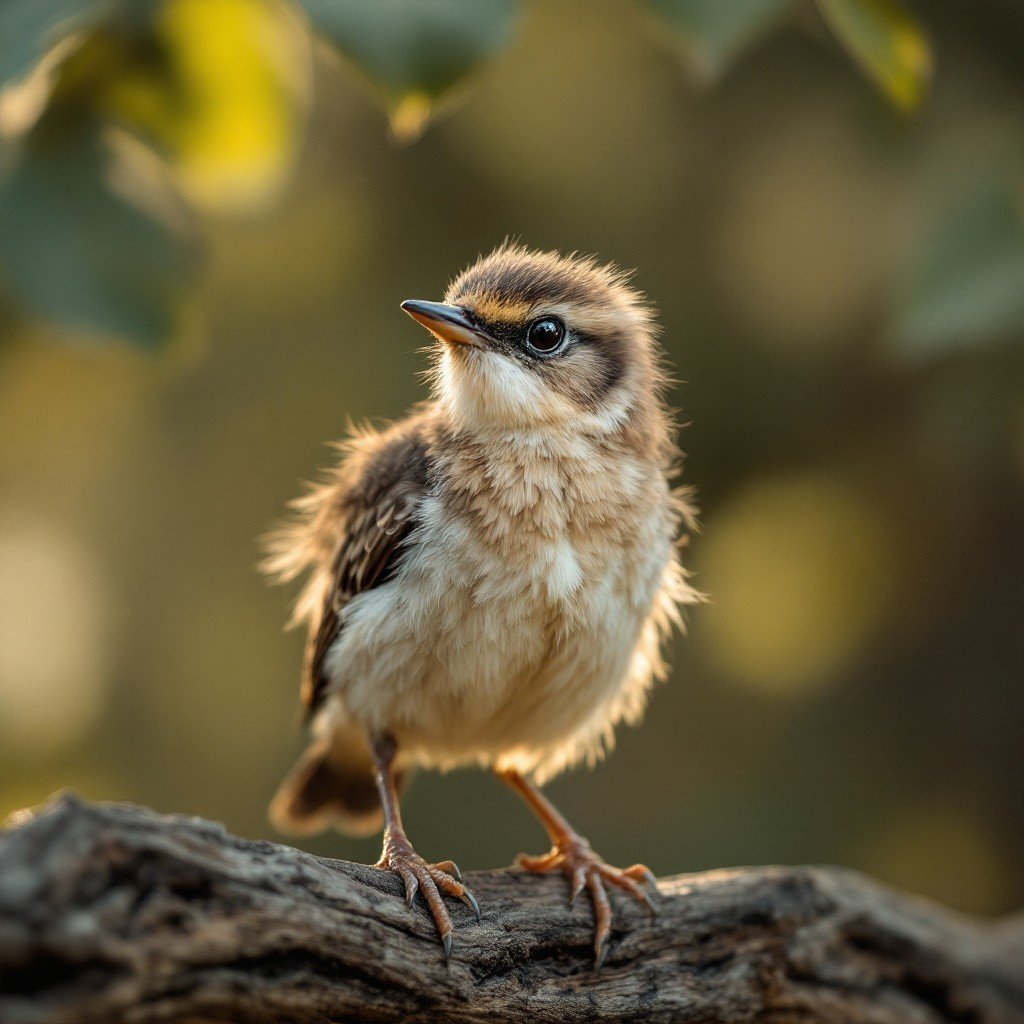
If you’ve ever watched a young bird wobble on a branch, flap hard, and tumble into a shrub, you’ve probably wondered, how does a bird learn to fly? The short answer is that birds don’t learn flight from scratch the way we learn to ride a bike. Their bodies are built for it, but they still need practice, strength, timing, and confidence.
For many small songbirds, fledging happens roughly 10 to 21 days after hatching, depending on the species. Cornell Lab of Ornithology’s NestWatch program defines fledging as the stage when a young bird leaves the nest, even if it can’t fly well yet. That awkward gap between “out of the nest” and “good at flying” is where the real learning happens.
Image source: Web (Bing) / stockcake.com (Web image (fair-use with source credit))
Quick Answer
How does a bird learn to fly? It develops feathers, muscles, balance, and coordination. Parents encourage movement with calls and food.
The young bird flaps, hops, launches, and lands repeatedly. Early flights are often short and clumsy.
How Baby Birds Develop the Body Tools Needed for Flight
A young bird can’t fly just because it has wings. It needs the right feathers, strong flight muscles, working balance, and sharp coordination. Flight is a body-wide skill, not just a wing movement.
Flight feathers are the big piece. Primary feathers help create thrust. Secondary feathers help create lift.
Tail feathers work like a rudder and brake, especially during landing.

Image source: Pexels / Petr Ganaj (Pexels License)
Under those feathers, the pectoral muscles do much of the hard work. These breast muscles power the downstroke. The keel bone gives those muscles a strong anchor point.
| Body feature | What it helps with |
|---|---|
| Primary feathers | Forward push and wing control |
| Secondary feathers | Lift and stable gliding |
| Tail feathers | Steering, braking, and landing |
| Pectoral muscles | Wing power |
| Feet and legs | Perching, launching, and balance |
| Eyes and brain | Depth judgment and quick corrections |
You’ll often see young birds flapping before they leave the nest. That’s not random fussing. It builds strength and helps both wings move together.
If the feathers aren’t grown enough, flight won’t work well. If the muscles are weak, takeoff will be poor. If balance is shaky, landings get messy.
That’s why fledging looks awkward. The bird has the equipment. It’s still learning how to use it.
The Step-by-Step Fledging Process: From Wing Flapping to First Flight
Fledging is the process of leaving the nest and beginning life outside it. It doesn’t always mean the bird can fly cleanly on day one. Many fledglings spend time hopping, fluttering, hiding, and calling while parents keep feeding them.
Image source: Web (Bing) / stockcake.com (Web image (fair-use with source credit))
Think of fledging as a workflow, not one dramatic leap.
Wing stretching begins
The young bird opens and closes its wings in the nest. This improves strength and range of motion.Flapping gets stronger
It flaps while standing, crouching, or gripping the nest edge. This builds power without full takeoff.Branching starts
In many tree-nesting species, the bird moves onto nearby branches. It practices balance, gripping, and short hops.The first launch happens
The first flight may be a flutter to the ground. It may also be a short trip to another branch.Landing practice takes over
Landing is often harder than takeoff. Young birds overshoot, skid, tumble, or grab clumsily.Parents keep feeding and calling
Parent birds usually stay nearby. They use calls and food to draw fledglings toward safer cover.
If the bird is healthy and feathered, this messy stage is normal. If it’s alert, hopping, gripping, and calling, it’s probably doing what fledglings do.
Safe habitat helps too. Dense shrubs, native plants, clean water, and quiet corners give young birds places to hide between practice flights. A yard with cover is often more useful for wild birds than a wide open lawn.
What Changes the Timeline: Species, Nest Type, Weather, and Development
Birds don’t all follow the same flight schedule. A robin, duckling, swallow, gull, and hawk grow up in very different ways. The timeline depends on species, body size, nest type, feather growth, and risk.
As of 2026, the broad pattern remains clear in ornithology research. Small songbirds usually fledge faster than large birds of prey. Many songbirds leave the nest in about two to three weeks, while eagles and other large raptors may take months to fly strongly.
| Bird group | Typical early movement | Flight-learning pattern |
|---|---|---|
| Songbirds | Hop and flutter after fledging | Fast development with many short practice flights |
| Raptors | Stay near the nest area longer | Slow strength-building and longer parent dependence |
| Waterfowl | Walk and swim soon after hatching | Flying comes later after more body growth |
| Seabirds | Develop in colonies, burrows, ledges, or cliffs | Timing varies widely by species |
Nest type matters too. A cavity-nesting bird may leave from a hole in a tree or nest box. An open-cup nester may climb to nearby branches first.
Ground-nesting birds face different risks, especially predators, foot traffic, mowing, and weather.
Weather can make fledging harder. Strong wind, heavy rain, heat, or cold can turn a normal first flight into a rough landing. A fledgling caught in bad weather may look helpless, even when it’s not injured.
Development is the real deciding factor. If feathers, muscles, weight, and coordination line up, flight becomes possible. If one piece lags behind, the bird may stay clumsy longer.
That’s why the best question isn’t only “How old is it?” A better question is, “Does it look feathered, alert, and able to move?”
Nestling vs Fledgling: How to Tell What Stage a Young Bird Is In
A nestling belongs in the nest. A fledgling has usually left the nest and is learning to survive nearby. Knowing the difference helps you avoid rescuing a bird that doesn’t need rescuing.
A healthy fledgling on the ground can look vulnerable. That doesn’t mean it’s abandoned. Its parents may be watching from a fence, tree, roofline, or shrub, waiting for you to step away.
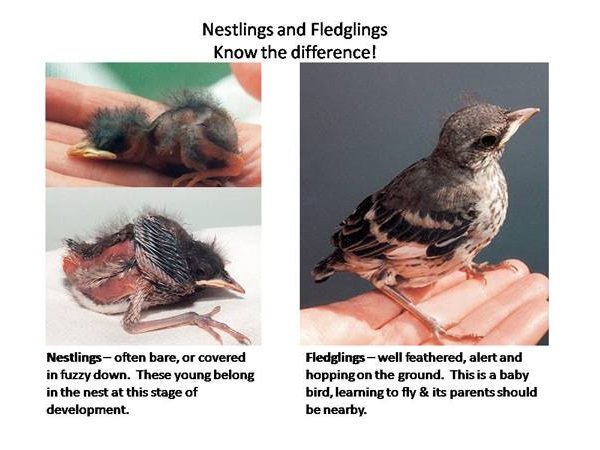
Image source: Bing (Web (fair-use with source credit))
Use this quick check:
| Sign | Nestling | Fledgling |
|---|---|---|
| Feathers | Bare, patchy, or downy | Mostly feathered |
| Movement | Weak or unable to stand well | Hops, grips, or flutters |
| Eyes | May be closed or newly opened | Open and alert |
| Location | Should be in the nest | Often on ground or low branches |
| Parent care | Needs frequent nest feeding | Still fed outside the nest |
If the bird is bare or only lightly feathered, it likely needs the nest. If you can safely find the nest, place it back. Parent birds usually continue care after brief human handling.
If the bird is mostly feathered and hopping, leave it alone unless it’s in immediate danger. Move it only a short distance to a shrub, low branch, or sheltered garden bed nearby. Parents locate fledglings by sound and movement.
If you see blood, a drooping wing, a cat attack, or weakness, contact a licensed wildlife rehabilitator. The U.S. Fish and Wildlife Service explains that many native birds are protected under the Migratory Bird Treaty Act, so keeping one without authorization can be illegal.
The safest rule is simple. If it’s a fledgling, give it space. If it’s injured, get expert help.
What To Do If You Find a Young Bird Learning to Fly
First, pause and watch from a distance. If the bird is mostly feathered, alert, and hopping, it’s likely a fledgling. The parents may not come close while you’re standing nearby.
Use this simple if/then guide:
| What you see | What to do |
|---|---|
| Feathered bird hopping on the ground | Leave it nearby and keep pets away |
| Bird in a road, driveway, or open path | Move it to low cover close by |
| Bare or patchy young bird | Return it to the nest if possible |
| Blood, injury, cat contact, or weakness | Call a licensed wildlife rehabilitator |
| Parents calling nearby | Back away and let them continue care |
Don’t feed bread, seed, milk, or water from a dropper. Baby birds can aspirate liquid into their airway. The wrong food can also cause digestive trouble or slow recovery.
If you must move a fledgling, keep it close to where you found it. A shrub, low branch, or sheltered garden bed is usually enough. Moving it across the yard can make it harder for parents to find it.
Pets are the biggest risk you can control. Keep cats indoors during fledging season. Leash dogs near shrubs, hedges, and low branches where young birds hide.
If you want fewer dangerous encounters, build safer cover before nesting season. Layered shrubs, native plants, and quiet corners create better shelter for visiting birds. That helps fledglings stay hidden while they practice.
Common Myths and Mistakes About Birds Learning to Fly
One of the biggest myths is that parent birds push babies out of the nest. Most young birds leave because their bodies and instincts are ready. Parents may call, feed, and guide them, but they’re not giving a formal flying lesson.
Another common mistake is assuming a grounded fledgling is abandoned. Young birds often spend several days low to the ground. That stage looks risky because it is, but it’s also normal.
Watch out for these errors:
- Picking up every fledgling: Most don’t need rescue.
- Moving birds far away: Parents may lose contact.
- Trying to raise one at home: Native birds often need licensed care.
- Feeding random foods: Diets vary widely by species.
- Trimming shrubs too soon: Fledglings use low cover for safety.
- Letting cats roam: Cats are a major predator of young birds.
- Standing too close: Parents may stay away until you leave.
Flight is not instant mastery. A fledgling may flutter well one hour and crash-land the next. That doesn’t mean something is wrong.
Look at function, not polish. If it can grip, hop, stay alert, and respond to parents, give it space. If it can’t stand, looks cold or limp, or has visible wounds, treat it as a rescue case.
Yards with layered planting give young birds safer practice space. Even small changes, like dense shrubs near open feeding areas, can make your outdoor space safer during fledging season.
Frequently Asked Questions
Do birds teach their babies to fly?
Parent birds support the process, but they don’t teach flight like a human teaches a lesson. The young bird has instincts and a developing body built for flight. Parents help by calling, feeding outside the nest, and guiding fledglings toward safer cover.
How long does it take a baby bird to fly well?
Many small songbirds improve over several days after fledging. Their first flights are usually short, low, and messy. Larger birds often take much longer.
Raptors may spend weeks strengthening flight skills and still rely on parents for food.
Why do fledglings sit on the ground?
Fledglings sit on the ground because early flight is clumsy. They may have left the nest before they can gain height or land cleanly. Ground time lets them rest, call to parents, and build strength between short fluttering attempts.
Should I put a fledgling back in the nest?
Don’t put a healthy fledgling back in the nest unless it’s clearly too young or unsafe. Most fledglings have already left on purpose. If it’s in danger, move it to nearby cover instead.
Keep it close enough for the parents to find it.
Can a baby bird survive if it falls from the nest?
It depends on its stage and condition. A feathered fledgling can often survive outside the nest with parent care. A bare or weak nestling needs help getting back into the nest.
If the bird is injured, cold, or attacked by a cat, contact a rehabilitator.
How can I help birds during fledging season?
Give fledglings space, keep pets away, and avoid trimming dense shrubs during active nesting periods. Add cover where young birds can hide between practice flights. A yard with native plants, water, and low shelter can support more bird activity without human interference.

Similar Posts