Waiting for birds can feel weirdly personal. You set everything up, fill the feeder, look out the window ten times, and nothing happens. If you’re wondering how long before birds come to a new feeder, the honest answer is usually a few days to two weeks, but some feeders take longer.
Birds are cautious with new objects, especially in open yards or busy spots. The Cornell Lab of Ornithology’s Project FeederWatch tracks feeder birds across North America and shows how strongly visits depend on season, habitat, and food type. Once you understand those patterns, the waiting period makes a lot more sense.

Image source: Bing (Web (fair-use with source credit))
Quick Answer
How long before birds come to a new feeder? Most birds arrive within 2 to 14 days. Some find it within hours.
Slow yards may take 3 to 6 weeks. Food, location, cover, and season make the biggest difference.
What Affects How Long Birds Take to Come to a New Feeder?
Birds don’t know your new feeder is a free meal. To them, it’s a new object in their territory. They need to spot it, decide it’s safe, then learn it has reliable food.
Feeder placement matters most. A feeder near shrubs, trees, hedges, or a fence line usually gets noticed faster. Birds like nearby cover because it gives them a quick escape route from cats, hawks, and sudden movement.
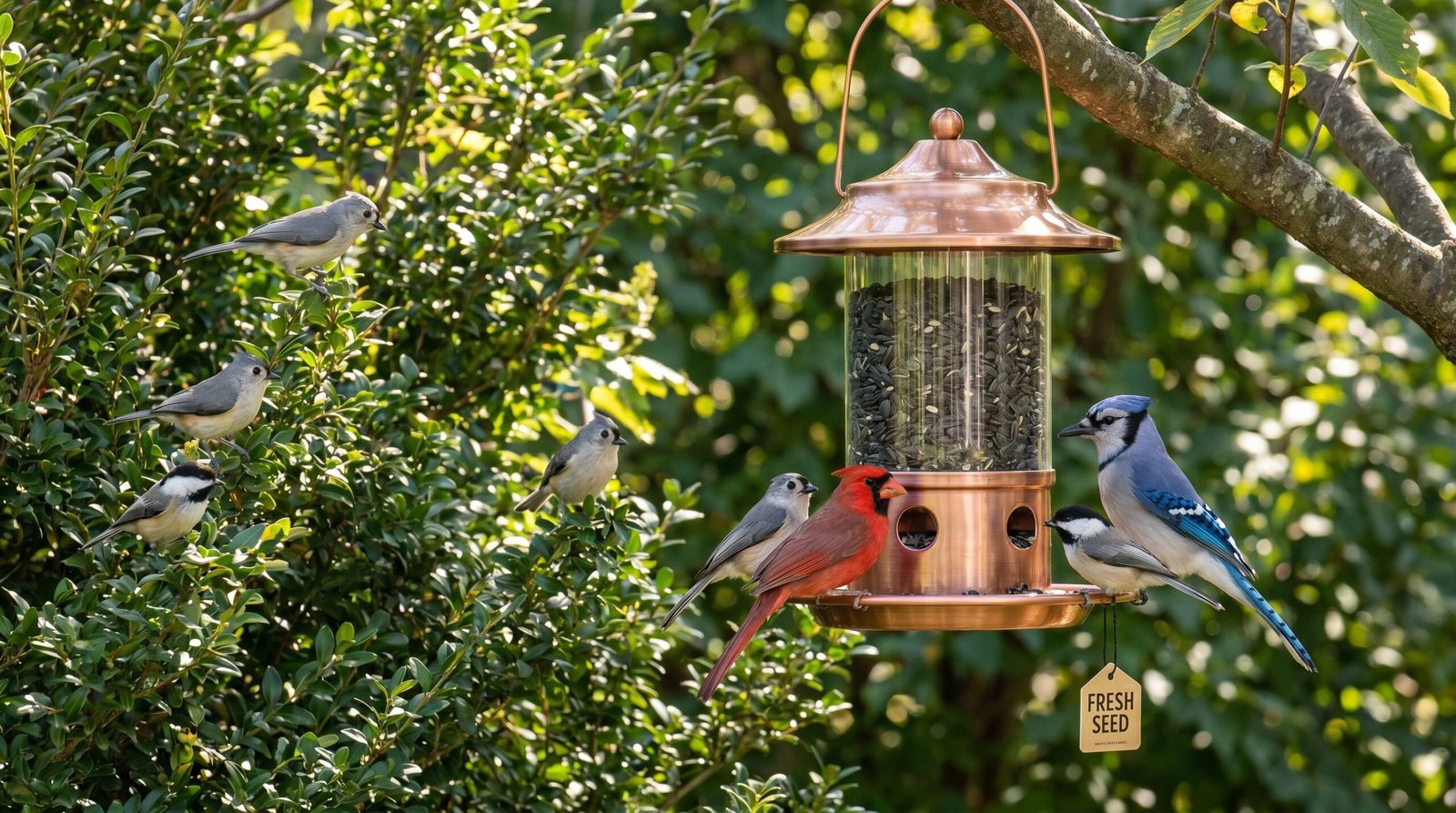
Image source: Bing (Web (fair-use with source credit))
Food choice also changes the timeline. Black oil sunflower seed is one of the best starter foods for many backyard songbirds. Nyjer seed attracts finches, suet attracts woodpeckers, and sugar-water nectar attracts hummingbirds.
Here’s what usually speeds things up or slows them down:
| Factor | Faster visits | Slower visits |
|---|---|---|
| Location | Near cover, easy to see | Hidden, exposed, or busy |
| Food | Fresh sunflower, suet, or nectar | Stale seed or filler-heavy mixes |
| Season | Winter and migration | Late summer with natural food |
| Yard habitat | Trees, shrubs, and water nearby | Bare lawn with little shelter |
| Disturbance | Quiet, predictable area | Dogs, cats, or foot traffic |
As of 2026, the same simple rule still works best. Make the feeder easy for birds to notice, but not so exposed that they feel unsafe.
A Realistic First-Month Timeline for a New Bird Feeder
Most new feeders follow a loose pattern. Your local birds may move faster or slower, but this timeline gives you a useful baseline.
| Time after setup | What often happens | What you should do |
|---|---|---|
| Day 1 to 3 | Birds may watch from nearby trees | Leave the feeder alone |
| Day 4 to 7 | First small birds may visit | Keep food fresh and dry |
| Week 2 | Visits often become more regular | Watch morning and late afternoon |
| Week 3 to 4 | More species may join in | Adjust only if visits stay low |
| Week 5 to 6 | A slow feeder should show activity | Troubleshoot location and food |
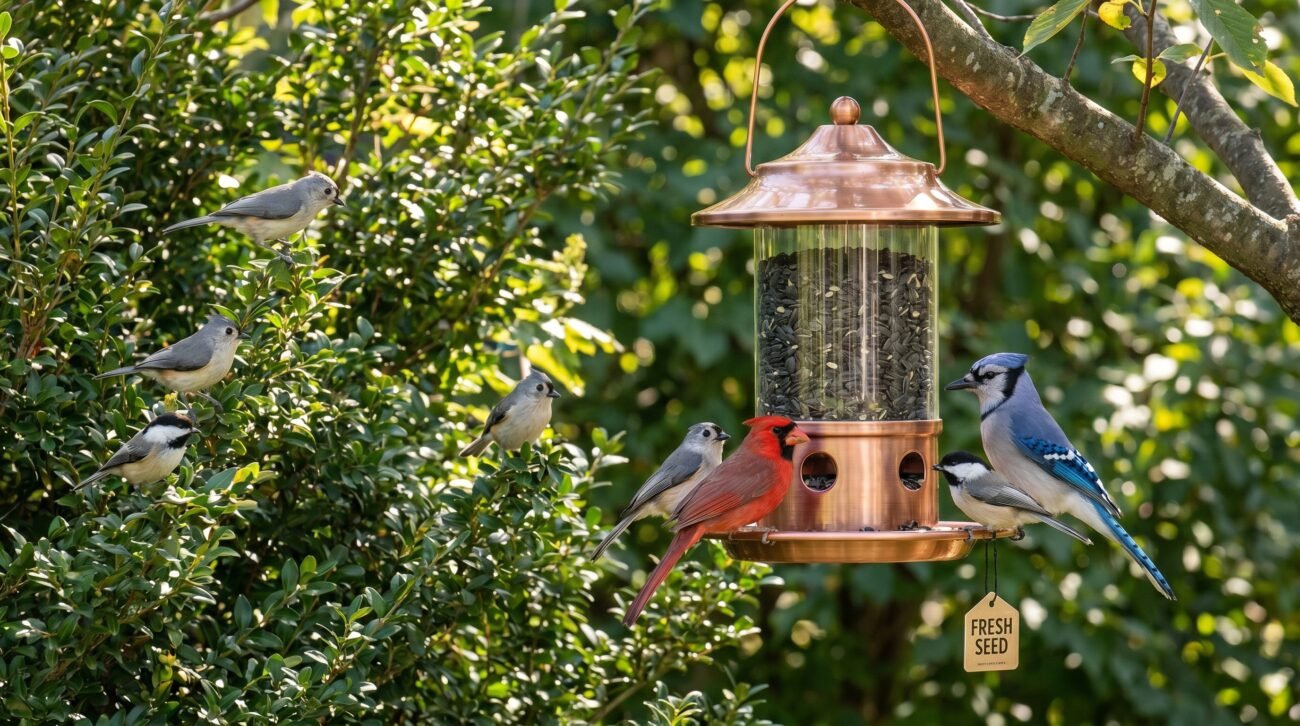
The first visitors are often bold, curious species. In many areas, chickadees, titmice, house sparrows, blue tits, great tits, finches, and nuthatches are early explorers. Cardinals, jays, and woodpeckers may take longer, especially if the feeder is exposed.
A quiet feeder after three days isn’t a failure. A quiet feeder after three weeks deserves a closer look. By then, birds should at least be checking the area if the food and location are right.
Try not to move the feeder every day. That resets the discovery process. Birds build a mental map of food sources, and consistency helps.
How to Help Birds Find and Trust Your Feeder Faster
The fastest way to attract birds is to make the feeder visible, safe, and worth revisiting. Think like a small bird. Open space feels risky, fresh food looks better, and nearby cover makes feeding less stressful.
Start with dependable food. For many seed feeders, black oil sunflower seed is the safest first choice because many species eat it. Sunflower hearts are cleaner and easier for small birds, but they spoil faster when wet.
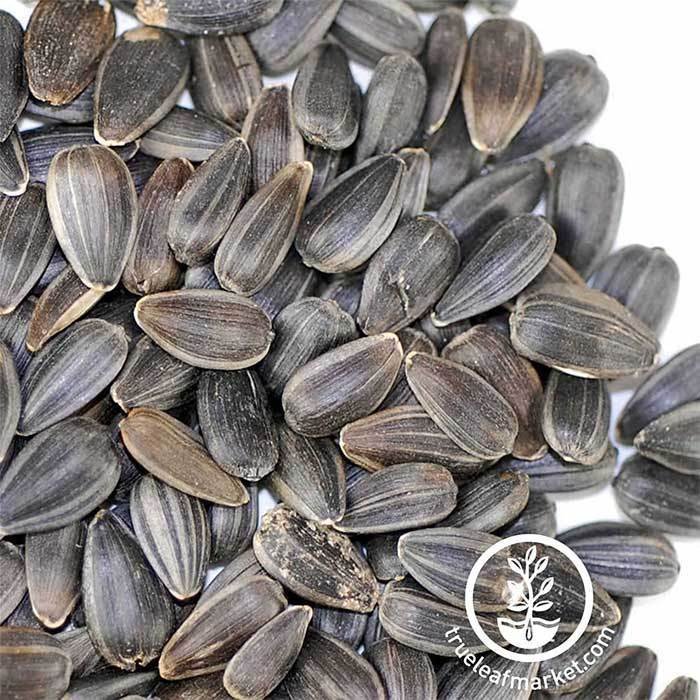
Image source: Bing (Web (fair-use with source credit))
Try this simple setup:
- Place the feeder 5 to 10 feet from shrubs, trees, or a hedge.
- Keep it visible from above and from nearby perches.
- Fill it with fresh seed, not an old bag from the garage.
- Scatter a small handful of seed below the feeder for a few days.
- Add a shallow bird bath if your yard is dry.
- Refill on a steady schedule, even if visits are light.
For hummingbird feeders, use plain white sugar and water. The standard home ratio is 1 part sugar to 4 parts water. Skip honey, red dye, brown sugar, and artificial sweeteners.
The National Audubon Society also recommends bird-friendly native plants. Feeders help, but habitat keeps birds returning.
If No Birds Have Come Yet: Troubleshooting by Timeframe
If no birds come after a few days, don’t panic. If no birds come after a few weeks, change one thing at a time. That way, you know what actually helped.
No birds after 3 days
This is still normal. Birds may have seen the feeder but not trusted it yet. Leave it in place and avoid fussing with it.
Check only the basics:
- Is the feeder filled with fresh food?
- Can birds see it from trees or shrubs?
- Is it away from dogs, cats, and heavy foot traffic?
- Is the seed dry and loose?
If all of that looks good, wait a little longer.
No birds after 1 week
Now it’s worth improving visibility. Scatter a little seed on a platform tray or clean ground below the feeder. Birds often notice food on a flat surface before they use feeding ports.
You can also add water. A shallow bird bath can be just as attractive as seed, especially in hot or dry weather.
No birds after 2 to 3 weeks
Look closely at placement. A feeder in the middle of a bare lawn often feels unsafe. Move it closer to cover, but not so close that cats can hide underneath it.
Change the food only if needed. If you’re using a cheap mix with lots of wheat, red millet, or cracked filler, switch to black oil sunflower seed or sunflower hearts.
No birds after 4 to 6 weeks
Something is probably working against you. The issue may be season, predators, poor habitat, or too much natural food nearby. Late summer and early autumn can be slow because wild seeds, berries, and insects are abundant.
Don’t give up too quickly. Improve cover, clean the feeder, refresh the food, and watch during peak feeding times. Early morning is often the best window.
Common Mistakes That Keep Birds Away From a New Feeder
The most common mistake is putting the feeder where you want to see it, not where birds feel safe using it. A perfect window view won’t help if the feeder hangs in a windy, exposed, high-traffic spot.
Another common problem is old seed. Bird seed can go stale, dusty, or moldy, especially in a damp shed or garage. Birds often reject it before we notice anything wrong.
Watch for these feeder problems:
- Moving the feeder too often
- Using stale, wet, or moldy seed
- Choosing the wrong feeder for the food
- Placing feeders too close to outdoor cats
- Hanging feeders where birds can’t easily see them
- Letting squirrels dominate the feeding station
- Filling hummingbird feeders with dyed nectar
- Ignoring dirty ports, trays, or perches
Window placement also needs care. Many bird safety groups recommend placing feeders either within 3 feet of a window or more than 30 feet away. The close option reduces collision speed, while the far option gives birds more room to react.
If you change something, make one change at a time. Move the feeder, change the food, or add water. Don’t do all three at once unless the setup is clearly wrong.
Safety, Cleaning, and Long-Term Feeder Success
A good feeder setup is about more than attracting birds. You also want to keep the feeding area clean, reduce disease risk, and avoid creating easy hunting spots for cats or hawks.
Image source: Bing (Web (fair-use with source credit))
Clean seed feeders about every 1 to 2 weeks during normal use. Clean them sooner after heavy rain, visible droppings, wet seed, or crowded feeding. Moldy seed can make birds sick, and it can also make a busy feeder go quiet.
For a deeper clean, empty the feeder first. Scrub away old seed, hulls, and droppings. Rinse well, then let the feeder dry fully before refilling.
Hummingbird feeders need faster care. In warm weather, replace nectar every 2 to 3 days. In hot weather, daily changes may be needed because sugar water ferments quickly.
Use this simple maintenance rhythm:
| Task | How often | Why it matters |
|---|---|---|
| Refresh seed | As needed | Keeps food dry and appealing |
| Clean seed feeder | Every 1 to 2 weeks | Reduces mold and disease |
| Replace nectar | Every 2 to 3 days | Prevents fermentation |
| Rake below feeder | Weekly | Reduces rodents and spoiled seed |
| Check predator cover | Monthly | Keeps birds safer |
Take feeders down for a while if you see sick birds. Warning signs include crusty eyes, fluffed feathers, poor balance, or birds sitting still near the feeder. Clean everything thoroughly before putting food out again.
If you live in bear country, follow local wildlife agency guidance. Many areas recommend removing bird feeders during active bear seasons. A feeder can become a high-calorie wildlife attractant very quickly.
FAQs About Birds Coming to a New Feeder
Why are birds not coming to my new feeder?
Birds may not be coming because the feeder is hard to see, too exposed, or filled with food they don’t prefer. Start with fresh black oil sunflower seed and place the feeder near shrubs or trees. If cats, dogs, or people pass nearby often, birds may avoid it.
Should I move my feeder if no birds come?
Move it only after giving birds at least 1 to 2 weeks. If the feeder is in a bare, windy, or busy spot, move it closer to safe cover. After moving it, wait again.
Birds need time to learn the new location.
What time of day do birds usually find feeders?
Birds often check feeders in the early morning and again in late afternoon. Morning is especially active because birds need food after the night. If you only look at midday, you may miss quick visits from cautious birds.
Does spreading seed on the ground help birds find a feeder?
Yes, a small amount can help during the first few days. Birds often notice food on open ground or a platform before they use feeder ports. Keep it light.
Too much ground seed can attract rodents or spoil after rain.
Do different birds take different amounts of time?
Yes, species behave differently around new feeders. Chickadees, tits, finches, sparrows, and nuthatches often investigate early. Cardinals, woodpeckers, jays, and doves may take longer, especially if the feeder feels exposed or the food type isn’t a good match.
When should I give up on a new feeder?
Don’t give up before 4 to 6 weeks unless the setup is unsafe or the food has spoiled. If nothing visits after that, change the location, seed type, or feeder style. Add water and nearby cover if your yard feels too open.
