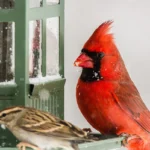
Cowbird vs Catbird: Key Differences Explained

You’re probably here because the names sound alike, but the birds don’t act alike at all. In a cowbird vs catbird comparison, the fastest split is this: a Brown-headed Cowbird is a stocky blackbird relative, while a Gray Catbird is a slim, secretive mimic with a catlike call.
They overlap across much of eastern and central North America, so the mix-up is common. As of 2026, the Cornell Lab of Ornithology lists the Brown-headed Cowbird at about 7.5 to 8.7 inches long and the Gray Catbird at about 8.3 to 9.4 inches. Size helps a little, but shape, sound, and behavior help much more.
Image source: Bing (Web (fair-use with source credit))
Quick Answer
Cowbird vs catbird comes down to shape, sound, and behavior. Cowbirds are stocky, short-tailed, and often feed on open ground. Catbirds are slimmer, long-tailed, and hide in shrubs.
Catbirds also give a clear catlike “mew” call.
Brown-headed Cowbird: Key ID Clues, Behavior, and Habitat
The Brown-headed Cowbird (Molothrus ater) belongs to the blackbird family, Icteridae. It has a compact body, a short tail, and a thick conical bill built for seeds. That bill is one of the best clues, especially when you’re looking at a female.
Male Brown-headed Cowbirds are easier to spot in good light. They have a glossy black body and a warm brown head. Females are plainer, with gray-brown plumage and a soft, washed-out look.

Image source: Bing (Web (fair-use with source credit))
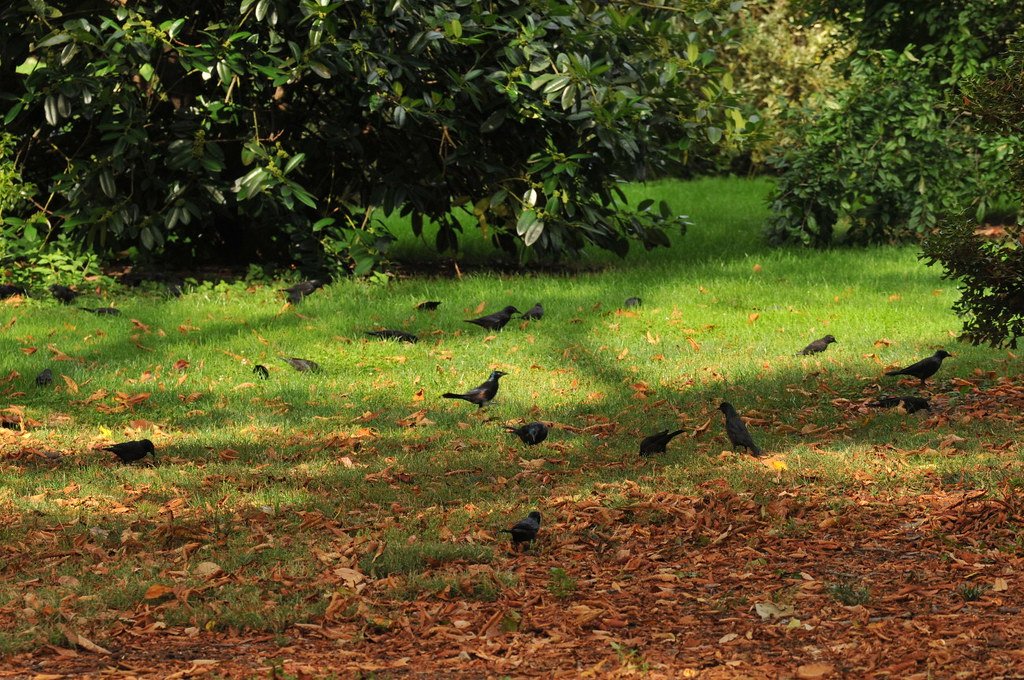
Watch how the bird moves. Cowbirds often walk on lawns, pastures, roadsides, and open field edges. They also mix with grackles, Red-winged Blackbirds, and starlings, especially outside breeding season.
Key cowbird clues:
- Stocky body
- Short tail
- Thick, seed-cracking bill
- Male with brown head and black body
- Female with plain gray-brown plumage
- Often feeds on open ground
- Often appears with other blackbirds
- Song sounds bubbly, gurgling, and whistled
Habitat is a big giveaway. If the bird is standing in open grass near livestock, feeders, or scattered trees, cowbird rises on the list. If you want more native bird activity around your home, better cover, water, and plant choices can make your outdoor space busier without relying only on feeders.
Gray Catbird: Key ID Clues, Behavior, and Habitat
The Gray Catbird (Dumetella carolinensis) belongs to the mimic family, Mimidae. That makes it a relative of mockingbirds and thrashers, not cowbirds. Its best-known clue is the nasal “mew” call, which can sound like a cat hidden in the bushes.
A Gray Catbird is mostly slate-gray. Look for a black cap on the head and a rusty patch under the tail. That rusty undertail can stay hidden, so wait for the bird to flick or cock its tail.

Image source: Bing (Web (fair-use with source credit))
Catbirds are slimmer than cowbirds and usually look longer-tailed. They often slip through shrubs, hedges, vine tangles, and woodland edges. You may hear one several times before you finally see it.
Best catbird clues:
- Smooth gray body
- Black cap
- Rusty undertail patch
- Long tail
- Thin, dark bill
- Catlike “mew” call
- Varied song with copied sounds
- Secretive movement in dense cover
Their song can run on with squeaks, whistles, and borrowed notes. Unlike a Northern Mockingbird, a catbird usually mixes phrases in a less repeated pattern. The Cornell Lab’s All About Birds species pages are a solid source for comparing songs, range, and field marks.
Cowbird vs Catbird Side-by-Side Comparison
The easiest way to separate these birds is to stop staring only at color. Color changes with light. Shape and behavior stay more reliable.
Use this table as your field shortcut.
| Feature | Brown-headed Cowbird | Gray Catbird |
|---|---|---|
| Scientific name | Molothrus ater | Dumetella carolinensis |
| Bird family | Icteridae | Mimidae |
| Body shape | Stocky and blackbird-like | Slimmer and longer-tailed |
| Bill | Short, thick, conical | Thin, dark, slightly curved |
| Main color | Male black with brown head, female gray-brown | Slate-gray with black cap |
| Tail | Short | Long, often flicked |
| Signature sound | Gurgles, whistles, chatters | Catlike “mew” and mimic song |
| Typical place | Lawns, fields, pastures, edges | Shrubs, thickets, hedgerows |
| Nesting style | Lays eggs in other birds’ nests | Builds its own nest |
If the bird is gray and skulking deep in a hedge, think catbird first. If it’s walking in open grass with other blackbirds, think cowbird first.
Females cause most confusion. A female cowbird can look like “just a gray bird” at a glance. But she has a thicker bill, shorter tail, and more grounded posture.
Catbirds look cleaner and sleeker. They also behave like birds that want cover nearby. Even when they come into the open, they often dive back into shrubs fast.
How to Tell Them Apart in Your Yard or on a Walk
Start with the bird’s overall shape. Don’t worry about perfect color yet. A quick silhouette check solves many cowbird vs catbird mistakes.
Use this simple field process:
- Check the tail. , Short tail: likely cowbird.
, Long tail, often flicked: likely catbird.
- Look at the bill. , Thick and cone-shaped: cowbird.
, Slimmer and darker: catbird.
- Watch the habitat. , Open lawn, pasture, feeder ground, or field edge: cowbird.
, Dense shrubs, hedges, vines, or woodland edge: catbird.
- Listen for the sound. , Bubbly whistles and gurgles: cowbird.
, Nasal “mew” or rambling mimic song: catbird.
- Check the standout marks. , Brown head on a black body: male cowbird.
, Black cap and rusty undertail: catbird.
Photos help, but take more than one angle if you can. A side view shows bill shape. A rear view may show the catbird’s rusty undertail.
A wider shot can reveal habitat, which matters more than many people expect.
Bird ID apps can help, too. Treat them as a second opinion, not a final answer. The official eBird platform is useful because it combines sightings, location, and season.
Common Mix-Ups: Female Cowbirds, Juvenile Birds, Mockingbirds, and Grackles
The hardest comparison is female Brown-headed Cowbird vs Gray Catbird. Both can look plain from a distance. The trick is to compare structure, not just shade.
A female cowbird looks chunkier, with a strong head and thick bill. She often feeds low or on the ground. A catbird looks smoother, longer-tailed, and more secretive.
Juveniles add another wrinkle. Young birds can look dull, streaky, or unfinished. If the bird lacks crisp adult marks, lean on behavior, bill shape, and where you found it.
Other birds can also sneak into the mix:
- Northern Mockingbird: slimmer, paler gray, longer tail, and white wing patches in flight.
- Brown Thrasher: warm brown above, heavily streaked below, with a long curved bill.
- Common Grackle: larger, longer-tailed, glossy, and more imposing.
- European Starling: chunky and short-tailed, often speckled or glossy.
- Red-winged Blackbird: male has red shoulder patches, while female is streaky brown.
A helpful rule: catbirds are usually shrub birds, while cowbirds are often open-ground birds. There are exceptions, but that pattern works well for everyday backyard birding. If a “gray bird” vanishes into a blackberry tangle and mews from cover, you’re probably looking at a Gray Catbird.
Nesting Differences: Cowbird Brood Parasitism vs Catbird Nest Building
Nesting is where these two birds split completely. A Gray Catbird builds its own nest, usually in dense shrubs or low trees. A Brown-headed Cowbird does not build a nest at all.
Cowbirds are brood parasites. That means the female lays her eggs in another bird’s nest and leaves the host parents to raise the chick. More than 200 host species have been documented for Brown-headed Cowbirds.

Image source: Bing (Web (fair-use with source credit))
Catbirds take the traditional route. They build a cup-shaped nest, often hidden in thickets, brambles, or ornamental shrubs. Their eggs are usually blue-green, which helps separate them from many speckled cowbird eggs.
Don’t remove eggs if you find a suspicious one. Native birds, eggs, and active nests are protected under the Migratory Bird Treaty Act. The [U.S.
Fish and Wildlife Service](https://www.fws.gov) is the right authority for federal bird protection rules.
If you’re worried about nests in your yard, step back and observe quietly. Limit close visits, keep pets away, and avoid trimming dense shrubs during nesting season. Better cover also helps nesting birds, so bird-friendly planting choices can make a real difference.
Frequently Asked Questions
Are cowbirds and catbirds related?
No, cowbirds and catbirds are not close relatives. Brown-headed Cowbirds are in the blackbird family, Icteridae. Gray Catbirds are in the mimic family, Mimidae.
That family difference explains their different shapes, sounds, feeding styles, and nesting behavior.
How can I tell a female cowbird from a catbird?
Look at the bill and tail first. A female cowbird has a thicker bill, a stockier body, and a shorter tail. A Gray Catbird looks sleeker, has a longer tail, and often shows a black cap with rusty color under the tail.
Which bird makes a sound like a cat?
The Gray Catbird makes the catlike sound. Its call is a nasal “mew” that often comes from thick shrubs. Cowbirds make gurgling whistles, chatters, and bubbly notes instead.
If the bird sounds like a hidden kitten, think catbird.
Do catbirds lay eggs in other birds’ nests?
No, Gray Catbirds build their own nests and raise their own young. Brown-headed Cowbirds are the brood parasites in this comparison. They lay eggs in other birds’ nests, and the host birds often feed the cowbird chick as their own.
Should I remove a cowbird egg from a nest?
No, don’t remove a cowbird egg from a nest. Active nests and eggs are legally protected in many cases. Removing eggs can also cause host birds to abandon the nest or trigger further cowbird damage.
Watch from a distance and contact a licensed wildlife professional if needed.
How do I attract catbirds without encouraging cowbirds?
Focus on shrubs, native berry plants, and layered cover. Catbirds like dense vegetation, while cowbirds prefer open ground and edge habitat. Reducing scattered seed under feeders can also help.
For practical yard ideas, building better backyard habitat is the smarter long-term move.

Similar Posts