Cheap Backyard Bird Feeders

That $7 tube feeder looks like a bargain, but cheap backyard bird feeders often cost far more than they save. Within weeks, thin plastic cracks, hangers snap, and waterlogged seed goes straight in the trash. The real question isn't how little you can spend upfront.
It's what your money buys over a full season.
Our research across manufacturer specs and verified buyer feedback shows a budget feeder typically lasts one to two seasons, while a mid-priced model runs three to five. Capacity matters just as much. A 1.5-pound tube empties fast, and every refill quietly adds cost.
Let's break down where your money actually goes.
Why the Cheapest Feeder Often Costs You Double
Cheap feels like a win at the register, then the math flips by spring. Most budget feeders share the same weak points: thin polypropylene that turns brittle in winter sun, hooks that bend under the weight of wet seed, and seams that split after freeze-thaw cycles. Each failure sends you back to the store.
Buyer feedback tells the same story. A $10 feeder often ends up costing $25 to $30 within a single season, because you replace it once, sometimes twice. Add the seed that spoiled in a leaky hopper, and your bargain suddenly costs more than a well-built $25 model would have.
Warning signs that a feeder won't last:
- Plastic thinner than a credit card
- Molded seams visible down the hopper body
- Hanger wire under 2mm thick
- No drainage holes in the base
That's what "cheap" really means at the low end. Thin material, no drainage, lids that pop open in wind, and ports that let rain soak the seed.
The Cornell Lab of Ornithology recommends cleaning feeders regularly and keeping seed dry, which budget designs often make difficult. So the goal isn't skipping cheap feeders entirely. It's finding the cheap feeder that won't self-destruct.
The 5 Feeder Styles Actually Worth Your Money
Five designs dominate the budget shelf, and each suits a different set of species. This table shows where your money fits.
| Feeder style | Best for | Typical budget price | Watch out for |
|---|---|---|---|
| Hopper (house-style) | Cardinals, jays, chickadees | $12 to $18 | Lids that swell or pop off |
| Tube | Finches, chickadees, titmice | $8 to $12 | Ports that crack in cold |
| Platform / tray | Mourning doves, juncos, sparrows | $6 to $15 | Seed gets soaked fast |
| Suet cage | Woodpeckers, nuthatches, wrens | $5 to $9 | Flimsy wire that bends |
| Window | Chickadees, finches, titmice | $8 to $15 | Suction cups that fall |
Simple suet cages and open trays are the most forgiving cheap buys, since they hold little seed and contain no moving parts. Tube feeders and hoppers demand better build quality because they hold more seed and face more beak traffic. If you only buy one, skip anything with a weight-operated squirrel shutoff at $15.
The mechanism fails within weeks, and you'll be back shopping by spring.
Roofed platform feeders keep rain off seed and still give you the open view. Unroofed trays are fine in dry climates, but they waste seed in a downpour. A plain tube feeder or suet cage gives you the most activity per dollar.
Both attract a steady stream of visitors, and both are simple enough to clean without a screwdriver.
Side-by-Side: What $10, $15, and $20 Really Get You
Price points matter less than what's in the box. That said, the budget bracket splits into three clear tiers.
| Price point | Typical build | What fails first | Realistic lifespan |
|---|---|---|---|
| $10 and under | Thin plastic, basic ports | Hanger, cracks, soggy seed | 1 season |
| $12 to $15 | Thicker plastic, metal ports, drainage | Latch or port wear | 2 to 3 seasons |
| $20 | Heavier resin, better covers | Squirrel damage if unprotected | 3 to 5 seasons |
The $12 to $15 range is the sweet spot. You get metal ports that resist chewing, drainage so seed stays dry, and a capacity that means refilling every few days instead of every morning. As of 2026, several mainstream brands still hit that bracket during seasonal sales.
Where you feel the difference is maintenance. A $10 feeder usually can't be taken apart for cleaning. A $15 one separates into parts you can wash in minutes.
That single feature matters more for bird health than any other spec on the box.
Heavier feeders also sit more stable in wind, so they toss less seed on gusty days. Rule of thumb: if a feeder weighs less than a pound empty, it's probably built too thin for a hopper.
Which Feeder Should You Buy? Match It to Your Yard
Your yard, your squirrel pressure, and your climate decide which cheap feeder survives. There's no universal best pick, but the decision tree is simple. Answer three questions and the right choice appears.
- Squirrel-heavy yard: Skip flimsy tubes. A metal-port tube feeder plus a $12 baffle beats any cheap "squirrel-proof" feeder on the shelf.
- Small balcony or patio: A window feeder gives the closest view, but buy one with a sturdy bracket. Cheap suction cups fail within days.
- Cold northern winters: Freeze-thaw cycles crack cheap plastic. Choose recycled plastic or a thicker resin hopper instead.
- Hot, humid regions: Mold grows fast in damp seed. Pick a feeder that disassembles completely and dries fast.
- New to bird feeding: Start with one tube feeder and black oil sunflower seed. It attracts the widest variety and teaches you feeding patterns.
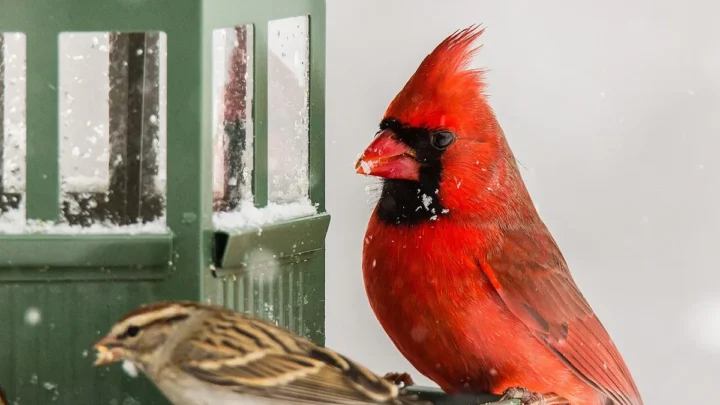
- Cardinals and larger birds: A platform feeder or a hopper with a deep base gives them room to land without crowding. House finches and goldfinches prefer tube feeders, so many yards end up running both.
If you're still torn, buy a suet cage. It's the cheapest, toughest, and easiest to clean of all the styles. It also brings woodpeckers, which is a win for any backyard.
Winter feeding matters most in northern states. Southern regions demand frequent cleaning through warm months, so easy disassembly wins every time.
Where Cheap Feeders Fail: What to Inspect Before You Hand Over Cash
A ten-minute inspection saves a season of frustration. Cheap feeders fail in predictable spots, and most damage is visible before you buy.
- Hangers: Thin wire bends under wet seed. Look for steel at least 2mm thick, ideally with a full loop.
- Lids: Weak clips pop open in a gust. Open and close the lid several times before buying.
- Ports: Plastic ports crack and get chewed through. Metal-reinforced ports are worth the extra dollar.
- Seams: Molded seams along the hopper body split after a few winters. Gently flex the plastic and look for stress marks.
- Drainage: No drain holes means soggy seed, and soggy seed means mold. Flip it over and check the base.
- Suction cups: Nearly every cheap window feeder ships with weak cups. Budget for a replacement set if you go that route.
Port size matters too. A tube with half-inch ports excludes cardinals but stops starlings from draining it in an afternoon. Then check the hanger mounting point.
A hollow plastic boss cracks fast, while a metal screw with a washer holds up far better.
Run a finger along the ports and tray edges as well. Sharp plastic flash cuts birds' feet and signals poor mold quality.
Per University of Minnesota Extension, emptying and scrubbing feeders every couple of weeks in warm weather keeps birds healthy. A feeder that won't come apart easily makes that job miserable. Choose one that disassembles in seconds.
Quick Fixes and Maintenance: Extend a Cheap Feeder's Life
A little maintenance stretches a cheap feeder's life significantly. The fastest payoff is the ten-minute clean. Disassemble, rinse with dish soap, scrub ports, and dry completely before refilling.
Next, make small upgrades. A $12 squirrel baffle protects a cheap feeder better than a pricier feeder would. A metal hook prevents sagging, and a seed tray catches hulls before they sprout weeds below.
When to toss it: cracked plastic, bent ports, rusted wire, or mold that won't scrub off. Don't patch a feeder with tape. The seal will fail, and you'll waste seed through the winter.
FAQs: First-Time Feeder Questions, Answered
Quick answers to the four questions new feeder hosts ask most.
How long does a cheap feeder actually last?
In our research, a $10 feeder averages one to two seasons outdoors. A $15 feeder typically lasts two to three. Thick resin, metal ports, and drainage holes are the main durability indicators.
Buy those features, and the dollar-per-season math flips in your favor.
What seed should I put in a budget feeder?
Black oil sunflower seed works best. It attracts the widest variety of birds and produces less waste than bargain mixes. Avoid blends with milo or red millet, which many birds toss onto the ground.
Straight sunflower keeps cleanup simple and visits steady.
How close to the house should I hang it?
Place feeders 3 to 5 feet from cover, like a bush or tree branch. That gives birds a safe escape route from predators. Keep them at least 10 feet from windows to prevent collisions.
A window feeder is the exception, since birds can see the glass up close.
Why is my cheap feeder getting ignored by birds?
Fresh seed matters most. If seed sat in a warm garage for months, birds will pass it up. Move the feeder near cover and be patient.
It often takes a few days for birds to discover a new feeding spot. Once they do, activity builds quickly.
The Verdict: Keep It Cheap, or Step Up in Price?
The smart move is a $12 to $15 feeder, plus a baffle if squirrels visit. That combo beats both a $10 throwaway and a $30 premium model on value. If your budget is truly tight, a suet cage costs under $10 and survives for years.
Spending $30 on one feeder makes sense only when you want maximum weather resistance and easy disassembly. Otherwise, two $15 feeders give you better species variety and a backup when one needs cleaning. Squirrel-heavy yards should spend on a baffle before upgrading the feeder itself.
Start with a metal-port tube feeder and black oil sunflower seed. It attracts the widest range of birds, cleans quickly, and tolerates the worst weather. If you want woodpeckers, add a suet cage later.
The right cheap feeder isn't the lowest price. It's the one that keeps working through a second spring.

Similar Posts