Is Cane Sugar OK for Hummingbirds? Nectar Safety Tips

If you’re asking “is cane sugar ok for hummingbirds”, the safe answer is yes, but only if it’s plain refined white cane sugar. Not raw cane sugar. Not brown sugar.
Not “natural” sugar with molasses still in it.
Hummingbird nectar should be simple: 1 part white granulated sugar to 4 parts water. That 1:4 ratio is the long-used backyard standard recommended by major birding and wildlife groups, including the Cornell Lab of Ornithology. Here’s the clean, safe way to think about it.
Image source: Bing (Web (fair-use with source credit))
Is Cane Sugar OK for Hummingbirds? Nectar Safety Tips
Quick Answer
Is cane sugar ok for hummingbirds? Yes, if it’s refined white cane sugar. Mix 1 part sugar with 4 parts water.
Never use raw, brown, or powdered sugar. Skip red dye completely.
Why the Type of Cane Sugar Matters for Hummingbird Safety
“Cane sugar” can mean different things on a grocery shelf. That’s where many feeder mistakes start. For hummingbirds, the safe choice is refined white cane sugar, which is mostly sucrose.
Sucrose is one of the main sugars found in many natural flower nectars. That’s why plain white sugar water works as feeder nectar. It’s not a full diet, but it can safely supplement flowers when mixed and maintained correctly.

Image source: Bing (Web (fair-use with source credit))
The problem starts with less-refined cane sugars. Raw cane sugar, turbinado sugar, demerara sugar, and brown sugar can contain molasses and extra minerals. Hummingbirds don’t need those ingredients in a feeder.
Use this quick label check:
| Sugar label | Use for hummingbirds? | Why |
|---|---|---|
| White granulated cane sugar | Yes | Plain sucrose, no dye, no molasses |
| White beet sugar | Yes | Also refined sucrose |
| Raw cane sugar | No | Less refined, may contain minerals |
| Brown sugar | No | Contains molasses |
| Powdered sugar | No | May contain anti-caking starch |
As of 2026, the safest guidance is still simple. Use plain white sugar. Keep the feeder clean.
Let real flowers do the rest of the work in your yard.
If you’re building a more bird-friendly space beyond feeders, add nectar plants, shelter, and safe water. A wider plan for welcoming local birds helps more species than a feeder alone.
Safe Hummingbird Nectar Recipe Using White Cane Sugar
The safe homemade nectar recipe is 1 part refined white sugar to 4 parts water. By volume, that means 1 cup sugar and 4 cups water. You can scale it down for a small feeder.
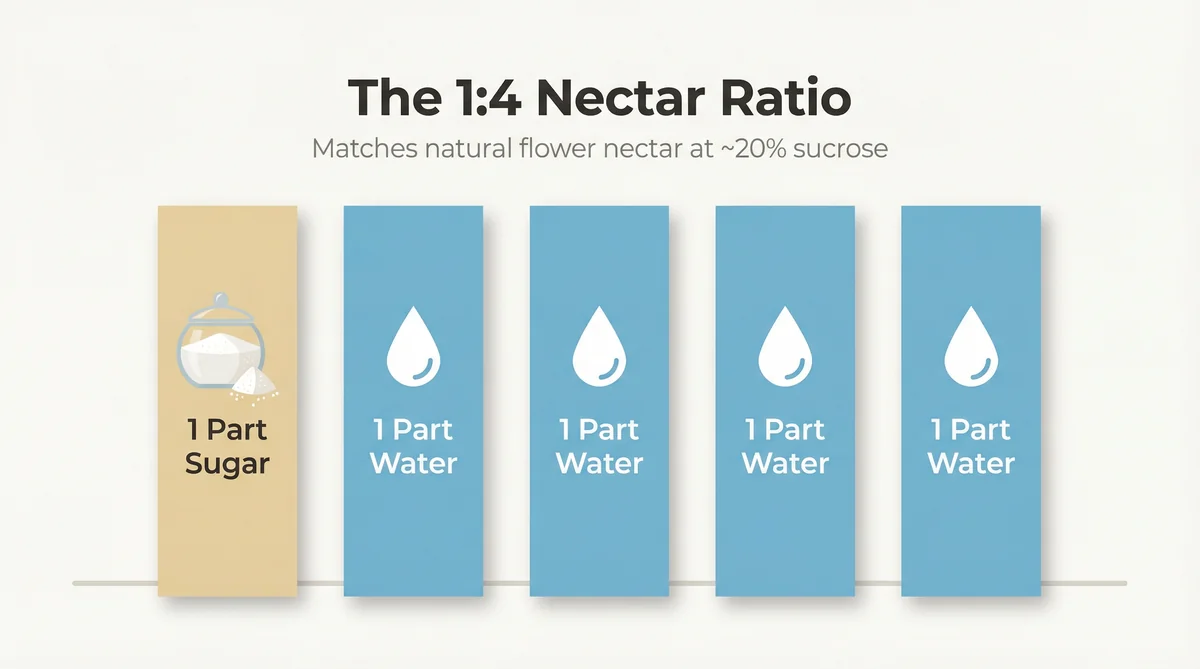
Image source: Bing (Web (fair-use with source credit))
Use this simple process:
- Measure 4 cups of water.
- Heat the water until it’s hot.
- Stir in 1 cup white granulated cane sugar.
- Mix until the sugar fully dissolves.
- Let the nectar cool completely.
- Fill a clean feeder.
- Store extra nectar in the refrigerator.
You don’t need to boil the mixture for a long time. Heating the water helps dissolve the sugar. If your tap water is safe for you to drink, it’s usually fine for nectar.
Do not add red food coloring. The red parts on most feeders are enough to attract hummingbirds. The [U.S.
Fish and Wildlife Service](https://www.fws.gov) encourages safer wildlife feeding habits that reduce contamination and avoid unnecessary additives.
Make smaller batches if birds are not emptying the feeder quickly. Fresh nectar is safer than a large feeder sitting outside for days. In hot weather, small feeders are often easier to manage.
For more context on what you might see around a feeder, a guide to familiar backyard species can help. It’s useful when you want to tell hummingbirds from other quick-moving visitors.
Cane Sugar vs Raw Sugar, Brown Sugar, Honey, and Other Sweeteners
Plain white cane sugar is the right choice because it gives hummingbirds a clean sucrose solution. Most other sweeteners add the wrong ingredients or spoil too quickly. “Natural” does not always mean safer here.
| Sweetener | Safe choice? | Main concern |
|---|---|---|
| Refined white cane sugar | Yes | Use only with water |
| Refined white beet sugar | Yes | Similar sucrose source |
| Organic raw cane sugar | No | Often less refined |
| Turbinado sugar | No | May contain molasses traces |
| Brown sugar | No | Contains molasses |
| Honey | No | Ferments quickly |
| Maple syrup | No | Wrong sugar mix for feeders |
| Artificial sweeteners | No | No useful calories |
Honey deserves special attention. It sounds wholesome, but it can ferment fast in a feeder. Hummingbirds need quick energy, not a sweet liquid that turns sour in warm weather.
Artificial sweeteners are also a hard no. They may taste sweet to people, but they don’t give hummingbirds the calories they need. These birds burn energy at a remarkable rate.
Powdered sugar is another poor choice. Many brands contain cornstarch to prevent clumping. That extra ingredient does not belong in hummingbird nectar.
If you’re planting for birds too, nectar-rich flowers support a healthier habitat. Feeders help, but smart yard habitat choices make a bigger long-term difference.
Common Hummingbird Feeder Mistakes That Can Harm Birds
The biggest mistake is using the wrong sugar. If the package says raw, brown, golden, turbinado, or demerara, don’t use it. Choose white granulated sugar instead.
Another common problem is leaving nectar out too long. Sugar water spoils faster than many people expect. Heat, sunlight, insects, and bird contact all speed up fermentation and bacterial growth.
Watch for these warning signs:
- Cloudy nectar
- Sour or yeasty smell
- Black specks inside ports
- Slimy feeder surfaces
- Mold around flower ports
- Dead insects in the reservoir
If you see any of those, empty the feeder right away. Wash it before refilling. Don’t just top it off with fresh nectar.
A too-strong mix can also cause problems. More sugar does not mean better nutrition. Stick with the 1:4 recipe unless a licensed wildlife rehabilitator gives you specific advice.
Feeder placement matters too. Put feeders near cover, but not where cats can ambush birds. If feeders are close to windows, use decals or other collision prevention tools.
If you enjoy watching feeder visitors, learning common bird patterns makes the setup more rewarding. It also helps you notice when a bird looks weak, sick, or unusually still.
How to Keep Sugar Water Fresh, Clean, and Safe
Fresh nectar matters as much as the sugar you choose. A perfect 1:4 mix can become unsafe if it ferments or grows mold. Warm weather speeds that up fast.
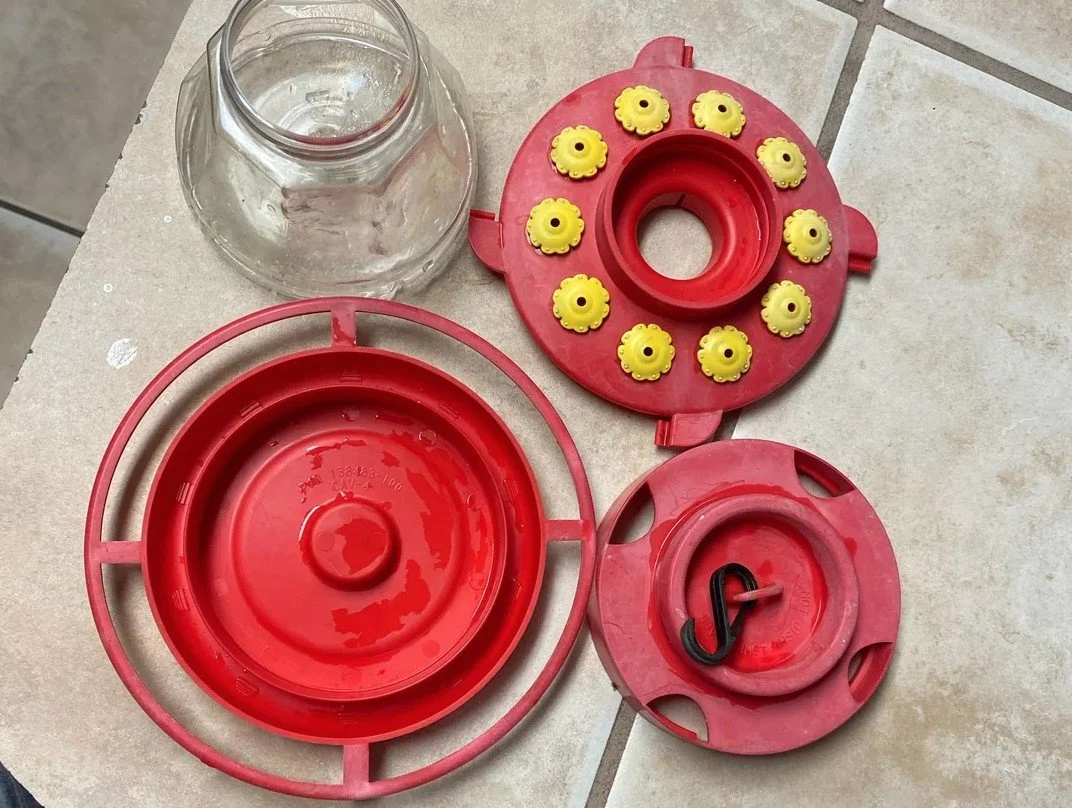
Image source: Bing (Web (fair-use with source credit))
Use temperature as your guide:
| Outdoor conditions | Change nectar every | What to watch for |
|---|---|---|
| Cool or mild weather | 3 to 5 days | Cloudiness or insects |
| Warm weather | 2 to 3 days | Sour smell |
| Hot weather | 1 to 2 days | Fermentation and mold |
| Heat waves | Daily | Rapid spoilage |
Clean the feeder before every refill. Don’t rinse and refill over old residue. Sugar film can hide around feeder ports, seams, and flower-shaped openings.
A bottle brush helps with reservoirs. A small port brush or clean toothbrush works well for tight openings. Rinse thoroughly so no cleaner remains.
If you find black mold, take the feeder down right away. Scrub it well, then soak parts if the manufacturer allows it. Replace cracked plastic parts that stay cloudy or dirty after cleaning.
Place feeders in partial shade if you can. Full sun warms nectar quickly. Smaller feeders are often safer because birds empty them faster.
Native nectar plants can also reduce pressure on feeders. When your yard has flowers, birds are not relying on one sugar-water source. That kind of bird-friendly planting is safer and more natural.
When to Stop Feeding or Get Wildlife Help
Stop feeding temporarily if birds look sick around your feeder. Warning signs include puffed-up posture, weak flight, crusty bills, or unusual stillness. Shared feeder ports can spread illness when many birds visit the same spot.
If one bird appears injured, don’t try to treat it yourself. Contact a licensed wildlife rehabilitator or your state wildlife agency. Hummingbirds are fragile, and handling can make injuries worse.
Take the feeder down if you can’t clean it often enough. No feeder is better than a dirty feeder. This matters most during hot, humid weather.
You should also pause feeding if bees, wasps, or ants keep getting into the feeder. Avoid pesticides near feeders. Insecticide drift can harm birds and the insects they eat.
Use this quick safety rule:
- If nectar is cloudy, dump it.
- If mold appears, clean deeply.
- If birds seem sick, remove the feeder.
- If insects keep getting trapped, adjust the setup.
- If you’re unsure, call a wildlife rehabilitator.
You can keep feeding through migration if the feeder stays clean. Leaving a feeder up does not stop healthy hummingbirds from migrating. Day length, hormones, weather, and food availability all play a role.
If other birds are active in the same area, watch their behaviour too. A quick refresher on regular yard visitors can help you spot normal versus unusual activity.
Frequently Asked Questions
Can I use organic cane sugar for hummingbirds?
Use it only if it is refined white granulated organic cane sugar. Do not use organic raw cane sugar, golden sugar, or turbinado-style sugar. The word “organic” does not make it safer for hummingbirds.
The key detail is refinement, not the farming label.
Is beet sugar as safe as cane sugar?
Yes, refined white beet sugar is safe for hummingbird nectar. It is also sucrose, like refined white cane sugar. Use the same 1:4 recipe.
Avoid any sugar blend with additives, coloring, flavouring, or unusual ingredients.
Do hummingbirds need red nectar?
No, hummingbirds do not need red nectar. A red feeder base or red feeder flowers are enough to get their attention. Clear sugar water is the safer choice.
Red dye adds no nutrition and should be left out.
Can I make hummingbird nectar stronger during migration?
Stick with the standard 1:4 sugar-to-water ratio for normal backyard feeding. Stronger syrup can spoil, crystallize, or make feeder ports sticky. Migrating hummingbirds also feed from flowers and insects, so your feeder is only one food source.
How long can homemade nectar stay in the fridge?
Extra homemade nectar can usually stay in the refrigerator for about 7 to 10 days. Keep it in a clean, covered container. Throw it out if it looks cloudy, smells sour, or has floating particles.
Always cool nectar before filling the feeder.

Similar Posts