Best Bird Feeder
Trying to find the best bird feeder for your backyard can feel like falling into a rabbit hole of tubes, hoppers, and metal cages. Every brand claims its feeder is squirrel-proof, weather-proof, and bird-approved. But the truth is simpler.
The best bird feeder is the one that matches your specific yard, your target birds, and your willingness to clean it.
In our research, we've seen that a medium tube feeder filled with black-oil sunflower seed attracts more than 20 common backyard species, from chickadees to cardinals. As of 2026, Project FeederWatch data shows that sunflower seeds consistently top the list for North American feeder visits. That's why most serious birders start there.
Once you understand your options, you'll know exactly what to buy.
Quick Answer
The best bird feeder depends on what birds you want to attract and where you live. For most backyards, a tube feeder with black-oil sunflower seed is the smartest start. It attracts dozens of species, sheds water well, and keeps seed dry.
Add a hopper feeder later to welcome cardinals, jays, and other larger birds.
What "Best" Actually Means for Bird Feeders
There is no single "best bird feeder" that fits every backyard. The right choice depends on your local birds, your yard's layout, and how much you want to clean. Squirrels, weather, and even neighbors can change the equation.
We've seen people give up on feeding birds entirely because they bought the wrong style first.
The key is to start with your situation. If you live in a suburban neighborhood with gray squirrels, a weight-activated tube feeder will save you hours of frustration. If you have a small apartment patio, a window feeder gives you close-up views without taking floor space.
If you want ground-feeding birds like doves and cardinals, a platform feeder works best, though it does dump seed onto the lawn.
Our research, plus data from Cornell Lab of Ornithology, consistently shows that black-oil sunflower seed attracts the greatest variety of North American songbirds. That fact alone should guide your first feeder purchase. As of 2026, the popularity of sunflower seeds hasn't changed.
So, before reading a single product review, answer these three questions:
- Which birds do you want to see?
- Squirrels or raccoons likely to visit?
- How often can you clean and refill?
Your answers will narrow down the "best" feeder faster than any top-ten list.
The Main Feeder Types, Explained
To pick well, you need to know what's out there. Here's a quick rundown of the five most common feeder styles and the birds they attract.
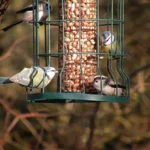
Tube feeders are tall, clear plastic cylinders with feeding ports. They're the workhorse of backyard feeding. Small birds like chickadees, goldfinches, and nuthatches use them easily. They hold 1 to 5 pounds of seed and are simple to hang.
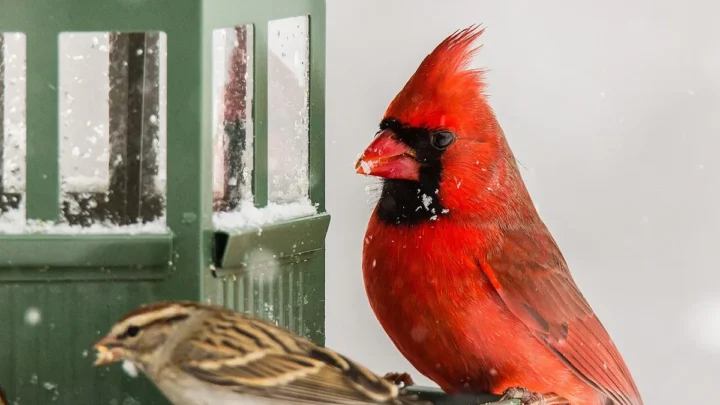
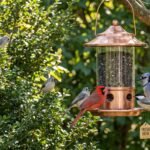
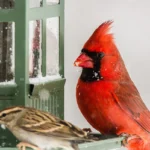
Hopper feeders look like small houses or barns. Seed pours from a central reservoir onto a tray at the bottom. Larger birds like cardinals, blue jays, and grackles push onto the tray, so they need more space. They hold more seed but can be heavy to hang.
Platform feeders are open tables, either on a pole or ground-mounted. They attract an enormous range of birds, including doves, sparrows, and woodpeckers. They also attract more squirrels and waste more seed. If you use one, pick a model with drainage holes.
Suet feeders are simple wire cages that hold beef-fat cakes. They're the best way to attract woodpeckers, wrens, and kinglets. Suet is high in fat, which helps birds survive cold nights. In warm months, switch to a no-melt version.
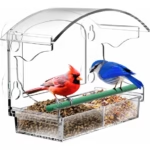
Window feeders are small acrylic boxes that attach to glass with suction cups. They give you stunning, close-up views. They also limit the birds you'll see to smaller species, and they need weekly cleaning to prevent disease.
Tube vs. Hopper vs. Platform: A Side-by-Side Comparison
If you're torn between the three most common styles, here's a simple breakdown. Use the table to compare them at a glance.
Image source: Wikimedia Commons / Royal Institution of Cornwall, Anna Tyacke, 2005-05-30 18:52:49 (CC BY-SA)
| Feature | Tube Feeder | Hopper Feeder | Platform Feeder |
|---|---|---|---|
| Seed capacity | 1–5 lbs | 5–10 lbs | 1–3 lbs |
| Best for | Small songbirds | Larger birds like cardinals | Ground feeders and doves |
| Squirrel resistance | Moderate | Low without extra protection | Very low |
| Cleaning ease | Easy, but narrow tubes | Easy, but heavy to refill | Hardest, gets messy fast |
In our research, a mid-sized tube feeder with metal-reinforced ports is the safest all-rounder. Hopper feeders win if you want a wide variety, but you'll fight squirrels. Platform feeders are best for dedicated ground-feeding areas.
Squirrel-Proof Feeders and Baffles: What Actually Works
Squirrels can destroy a feeder in days. The good news is that a few proven designs can stop them without starving the birds.
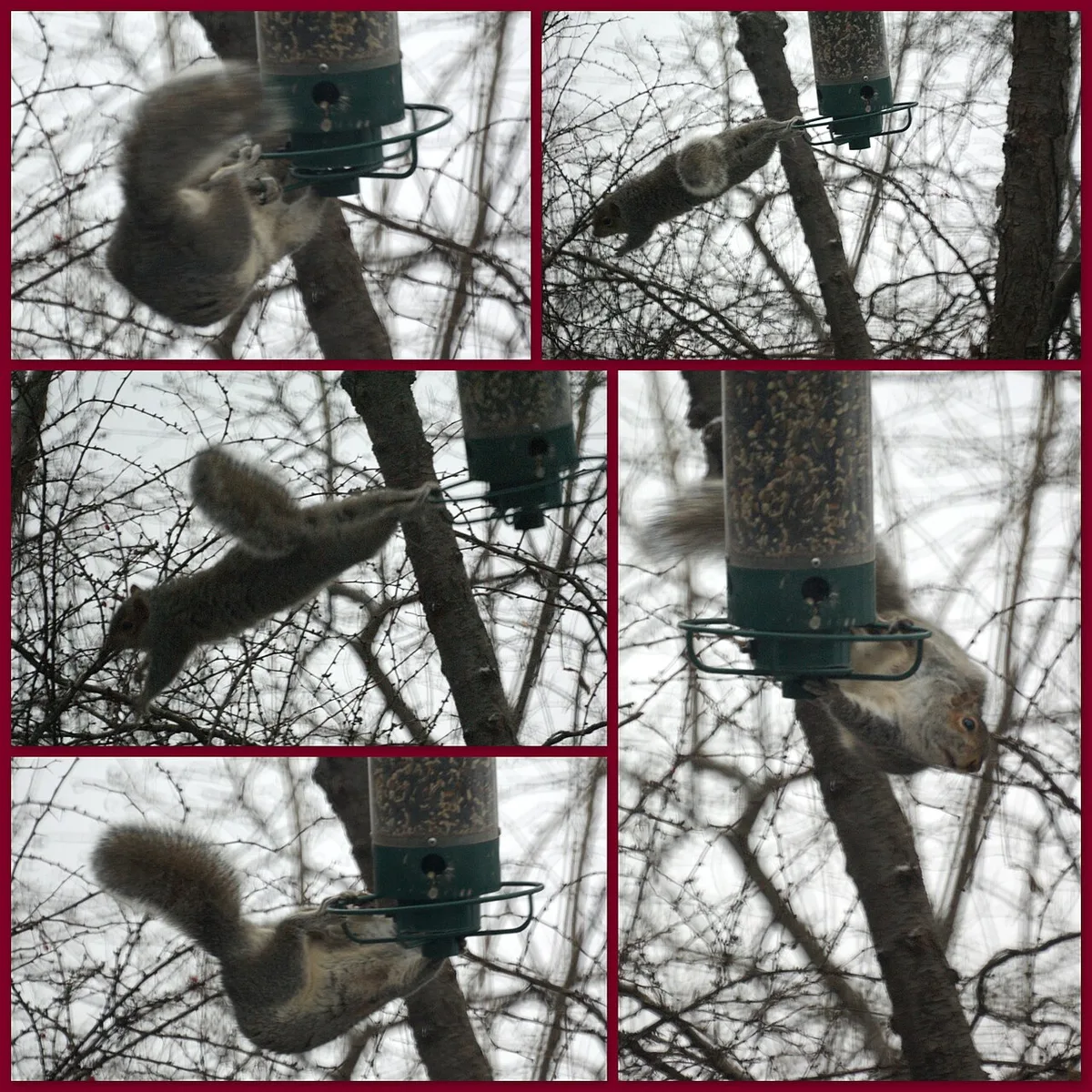
Image source: Wikimedia Commons / Mike's Birds from Riverside, CA, US (CC BY-SA)
Weight-activated feeders use a spring or counterweight. When a squirrel lands, the power closes the feeding ports or cuts off access. These work well, but they need to be adjusted for the weight of larger birds like woodpeckers.
Many models come with a manufacturer's guarantee.
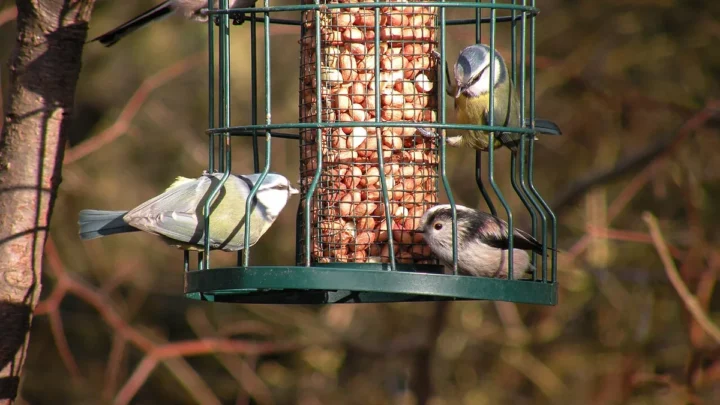
Full metal cages surround the seed with a wire mesh. Small birds fly through the gaps, but squirrels can't chew through the steel. These are durable and easy to fill.
The downside is that they can feel heavy and they sometimes hurt larger birds trying to perch.
Pole baffles are simple domes or cylinders that wrap around the feeder pole. Baffles stop climbing squirrels before they reach the seed. For best results, place the baffle at least five feet off the ground and eight feet away from any jumping-off point, such as a roof or a tree branch.
No solution is 100% foolproof. A determined squirrel can jump ten feet from a tree. Combine a baffle with a metal cage or weight-activated feeder for maximum protection.
Match the Feeder to Your Yard, Your Birds, and Your Time
Best for Beginners
If you're just starting out, buy a classic tube feeder with metal-reinforced ports. It's forgiving, easy to fill, and attracts the widest range of small songbirds. Look for one that comes apart without tools for cleaning.
That single feature will save you more frustration than any other design choice.
Best for Small Yards and Apartments
A window feeder is your best move if space is tight. Acrylic models stick directly to glass with suction cups and hold about a half pound of seed. You get eye-level views from your kitchen table.
Just clean them weekly, since a window feeder can be a highway for disease.
Best for Serious Birders Who Want Variety
Run two or three different feeder types at once. A hopper feeder brings cardinals and jays. A suet cage brings woodpeckers.
A nyjer sock brings goldfinches. Research from the Cornell Lab of Ornithology shows that feeder type diversity directly increases species diversity in your yard.
Best for Rainy, Humid, or Squirrel-Heavy Regions
Humid climates demand baffles and drainage. Choose a feeder with a domed roof and drainage holes in the base. If you live in a rainy region, avoid wide-open platform feeders.
They soak through quickly. Pair whatever you pick with a pole baffle if squirrels have found your yard.
Feeder Maintenance, Placement, and Seasonal Care
Where to Hang It to Keep Birds Safe
Place feeders within 10 to 15 feet of shrubs or trees. That gives birds a quick escape route from predators. Keep feeders at least 30 feet from windows to prevent collisions.
If that's not possible, put the feeder within 3 feet of the glass. Birds can't build up enough speed to hurt themselves at that distance.
Cleaning Schedule That Keeps Birds Healthy
Clean every feeder every two weeks, more often in warm weather. Empty old seed, scrub with hot soapy water, then rinse with a 9:1 water-to-bleach solution. Let it dry completely before refilling.
Wet or moldy seed spreads salmonella and avian pox. The U.S. Fish & Wildlife Service advises routine cleaning as the best prevention tool.
Seasonal Swaps: Suet in Winter, Nectar in Spring, No-Mess in Summer
Suet fuels birds through cold winter nights, so load it from November to March. Switch to nectar feeders in April when hummingbirds return. In the sticky summer months, swap to sunflower hearts or no-mess blend to keep sprouts out of your lawn.
Rotation keeps birds coming back all year without wasting money on seed they won't eat.
Frequently Asked Questions
Which bird feeder is easiest to keep clean?
A tube feeder with a removable base is the easiest. Unscrew the bottom, dump old seed, and wipe the inside in minutes. Avoid suet cages with tight corners or platform feeders with wide bases that trap droppings.
What's the best seed for a tube feeder?
Black-oil sunflower seed wins every time. It attracts cardinals, chickadees, titmice, nuthatches, and finches. If you want goldfinches specifically, switch to nyjer seed in a separate feeder.
Mixing nyjer in a standard tube feeder just makes a mess.
Where should I put a bird feeder to avoid window strikes?
Set feeders either within 3 feet of the window or more than 30 feet away. That's the scientifically backed sweet spot. The closer option lets birds fly off at safe, low speeds.
The farther option keeps them clear of the glass entirely.
How do I keep squirrels off my bird feeder for good?
Combine a pole baffle with a weight-activated tube feeder. Baffles stop climbing squirrels, and weight-activated perches shut feeding ports when a squirrel lands. If you use a hopper feeder, surround it with a full metal cage.
No single fix will stop every acrobatic squirrel.
How many bird feeders should I put up at once?
Start with one, then add a second style once you're consistent with refilling. Most yards with two feeders, one tube and one hopper, see the best diversity. More than four feeders becomes hard to maintain and can spread disease faster.
When's the best time of year to start feeding birds?
Almost any time works, but fall gives you the biggest payoff. Resident birds are settling in, and migrants are moving through. They'll remember your feeder all winter.
If you start to feed in the fall, keep feeding until late spring.

Similar Posts