Backyard Bird Feeder Ideas

Backyard bird feeder ideas aren't hard to find. What's hard is finding the one that actually works in your yard, and that's what this article is here to fix. Pick the wrong feeder and you'll be chasing squirrels, cleaning soggy seed, or wondering why birds never show.
Pick the right one and you'll likely see chickadees, finches, and cardinals visit within a few weeks.
Cornell Lab of Ornithology researchers note that feeder placement and feeder type directly influence which species visit. As of 2026, the most reliable setup involves matching the feeder to your local bird population and your problem animals. Let's walk through how to do that, step by step.
Quick Answer
Backyard bird feeder ideas should match your yard and your birds. Tube feeders work for most yards. Hopper feeders draw chickadees and cardinals.
Suet feeders bring woodpeckers. Platform feeders welcome jays but need daily cleanup. Start with one tube feeder and one suet cage.
Answer These 4 Feeder Questions Before You Buy Anything
Before you pick any feeder, ask yourself these four questions. They'll save you time, money, and frustration.
1. What birds live near you?
Look up your local species through your state's extension service or the Cornell Lab of Ornithology. If you have mostly small songbirds like chickadees and finches, a tube feeder with small ports works best. If you're hoping for cardinals and jays, they prefer hopper or platform feeders.
2. Do you have a squirrel problem?
If squirrels can reach the feeder, you have two solid routes. Choose a weight-activated squirrel-proof cage, or install a dome baffle on the pole below the feeder. You can also switch to safflower seed in a tube feeder, since squirrels dislike its bitter taste.
3. How much cleanup can you handle?
Dry seed in a tube or hopper feeder needs a deep clean every two weeks. Platform feeders need attention almost daily, because birds perch directly in the feed and it mixes with droppings. If you have mobility issues, a window feeder at eye level beats bending down to a tray.
4. Where do you want to put it?
Place feeders within 3 feet of a window, or at least 30 feet away. That middle zone causes the most window collisions. Also think about rain.
A feeder with a weather guard keeps seed dry and mold-free in wet climates. In areas with bears, follow local guidance about when to pull feeders down for the season.
Get these four answers down, and you'll stop guessing. The right feeder choice becomes obvious.
The 5 Feeder Types That Handle Most Backyards
Image source: Wikimedia Commons / malcolm tebbit (CC BY-SA)
Here's a quick tour of the five most useful feeder styles. Each one solves a different problem.
Tube Feeders
Long cylinders with small feeding ports and perches. They're excellent for finches, chickadees, titmice, and nuthatches. The enclosed reservoir keeps seed dry, and the small ports make it tough for grackles and starlings to hog the food.
Choose metal ports over plastic. Squirrels can chew through plastic in a night.
Hopper Feeders
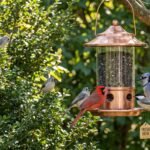
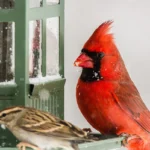
Hopper feeders look like little houses with a seed reservoir that empties into a tray below. They attract a wider crowd, including cardinals, blue jays, and mourning doves. The open tray collects hulls, so pick a model with a removable base for fast cleanup.
Position it near dense cover but 5 to 10 feet away.
Platform Feeders
A flat, open tray on legs or poles, best for variety. You can serve seed, mealworms, fruit, or suet crumbles. That flexibility comes with a cost: the tray catches everything, including bird droppings.
Plan to clean it every day or two.
Suet Feeders
A metal cage that holds suet cakes. Suet is rendered fat that fuels woodpeckers, nuthatches, and chickadees through cold months. Use standard beef-based suet in winter, and switch to no-melt or insect-heavy blocks when temperatures climb past 70°F.
Nyjer Feeders
Also called thistle feeders, these use tiny ports that only nyjer seed fits through. They pull in goldfinches, pine siskins, and house finches. The seeds flow easily, so choose a feeder with a tray at the bottom to catch spills.
| Feeder Type | Best For | Cleaning Effort | Squirrel Risk |
|---|---|---|---|
| Tube | Small songbirds | Low | Moderate |
| Hopper | Cardinals, jays | Medium | High |
| Platform | Diverse species | High | High |
| Suet | Woodpeckers | Low | Moderate |
| Nyjer | Finches | Medium | Low |
Match a Feeder to Your Yard: 5 Common Setups
Every yard has its own personality. Here's how to match a feeder to common situations.
The Squirrel War Zone
If squirrels rule your yard, go with a metal tube feeder and nothing else. Add a dome baffle on the pole, mounted 4 to 5 feet up. A weight-activated cage feeder is even more reliable, though heavier.
Use safflower seed to limit squirrel interest in the first place.
The Small Balcony or Patio
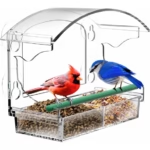
Skip the tall pole entirely. A window feeder with a suction mount puts birds right in front of you. Or grab a small hopper feeder that clips to a balcony rail.
Keep it to about 1 to 2 quarts of seed so it stays easy to fill and clean.
The Woodpecker Lover's Yard
Woodpeckers come for suet, plain and simple. Use a standard suet cage in the open, and add a tail-prop version so larger species like the pileated woodpecker can brace themselves. A platform feeder with raw peanuts nearby will also pull them in during winter.
The Finch-Only Fan
Goldfinches and house finches love nyjer seed more than almost anything. A mesh nyjer feeder with a built-in tray gives smaller birds the perching space they need. Keep it topped off and dry.
Wet nyjer clogs the ports quickly.
The Hummingbird Lover's Porch
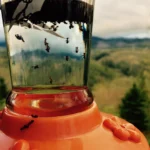
A hummingbird feeder adds color and motion that nothing else matches. Use a bottle-style feeder with red accents and a 1:4 sugar-to-water ratio. Change the nectar every 3 to 4 days in warm weather to stop fermentation.
These five setups cover the vast majority of backyards. Start with one and expand later.
Feeder Mistakes That Scare Birds Away (and How to Fix Them)
Even a great feeder can go quiet if you repeat these common mistakes.
Placing it too close to cover. Cats and hawks use dense shrubs as ambush points. Keep feeders 5 to 10 feet away from bushes and trees, near enough for a quick escape, far enough to spot danger.
Letting seed get wet. Wet seed grows mold, and mold can kill birds. After every rainfall, check the tray and the reservoir. If seed is clumped or smells musty, toss it.
A weather guard cuts most moisture.
Buying cheap seed blends. Many budget bags are mostly milo and millet, which many songbirds ignore. They end up on the ground, attracting starlings, pigeons, and rodents. Use black-oil sunflower seed as your base.
It has the highest appeal per dollar.
Skipping the scrub. Dirty feeders spread salmonella and finch eye disease. Every two weeks, wash feeders with a diluted bleach solution using 1 part bleach to 9 parts water. Rinse well and dry completely before refilling.
Feeding bread. Bread fills birds up without real nutrition. In young birds, that can cause malnutrition. Offer seeds, suet, mealworms, and fruit instead.
Hanging feeders that swing wildly. Birds want a stable platform. In windy spots, use a pole mount or add a weight that slows the swing.
Set It Up Right: Placement, Squirrel Baffles, and the 10-Minute Clean
Where to Hang It
Pick a spot you can see easily from your window or porch. Keep feeders 5 to 10 feet from natural cover so birds have a safe escape route. Hang them from a sturdy branch, or mount them on a pole.
A pole with a sleeve baffle beats any hanging trick against squirrels.
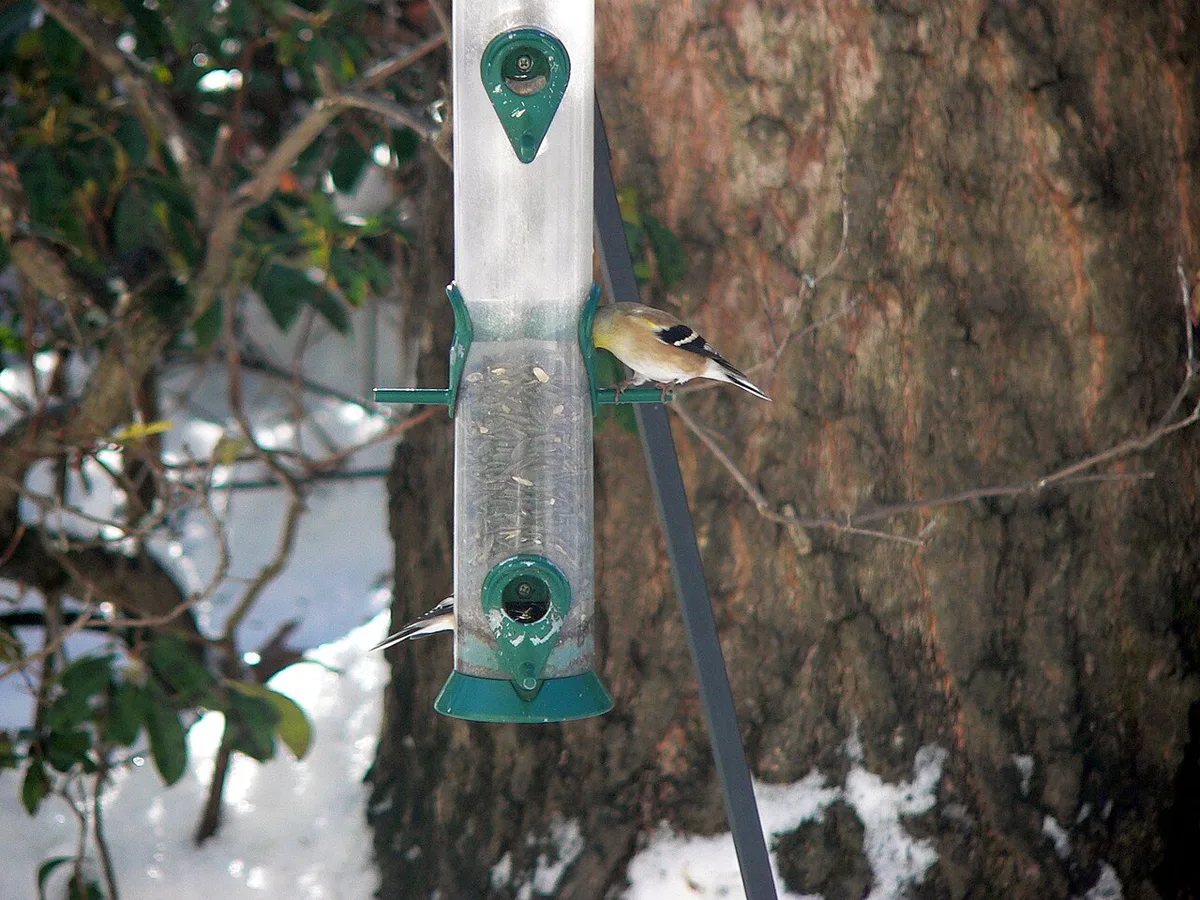
Image source: Wikimedia Commons / Pbtflakes (CC BY-SA)
The Cleaning Routine That Keeps Birds Healthy
Build a simple rhythm: a quick wipe daily, a deep clean every two weeks. For deep cleaning, mix one part bleach with nine parts water in a bucket. Submerge the feeder, scrub off debris, and soak for 10 minutes.
Rinse thoroughly and let it dry completely before adding fresh seed.
The same rules apply to hummingbird feeders but more often. Change nectar every 3 to 4 days when it's warm.
| Task | Frequency | Time Needed |
|---|---|---|
| Wipe tray and ports | Daily | 1 minute |
| Change hummingbird nectar | Every 3-4 days | 2 minutes |
| Deep clean all feeders | Every 2 weeks | 10 minutes |
In bear country, pull feeders down from April through October, or follow your local wildlife agency's guidance.
Bird Feeder FAQs You'll Actually Ask
What is the best bird feeder for a small yard?
A tube feeder with 4 to 6 ports is your best bet. It holds about 2 quarts, hangs easily, and handles chickadees, finches, and titmice. Skip large platform feeders in tight spaces.
They attract bigger crowds and demand constant cleanup.
How long does it take for birds to find a new feeder?
Most yards see their first visitors within 1 to 3 weeks. Birds locate food through visual cues and neighborhood chatter. Place the feeder near shrubs or trees, and it gets discovered faster.
Patience matters more than premium seed.
Should I feed birds in the summer?
Yes, just adjust the menu. Suet turns rancid above 70°F, so switch to insect or nut-based blocks, or skip it entirely. Keep sunflower seed and fresh water available.
Mealworms are also a huge hit while birds are raising chicks.
Why are birds not using my feeder?
Check for fresh seed, stable hanging, and nearby cover. Wet or empty feeders get ignored fast. Watch for predators like cats or hawks that make the spot feel unsafe.
A feeder that swings wildly in the wind also scares birds off.
How often do I clean a bird feeder?
Deep clean every two weeks with a 1:9 bleach solution. Hummingbird nectar needs changing every 3 to 4 days in warm weather. Wipe trays daily to prevent mold.
Regular cleaning stops finch eye disease and salmonella from spreading through your flock.
The Decision Guide: Which Feeder Should You Get?
Still unsure? Work through these branches and you'll land on a clear answer.
- New to feeding, most backyards: start with a tube feeder and black-oil sunflower seed. It's forgiving, affordable, and attracts the widest variety of songbirds.
- Squirrels own your yard: add a dome baffle on the pole, or switch to safflower seed in a metal tube. If they're persistent, go with an all-metal cage feeder and call it a day.
- You want woodpeckers: add a suet cage within 10 feet of a mature tree. Add a tail-prop version if you're hoping for pileated woodpeckers.
- Patio or small space: a window feeder or a 1-quart hopper on a railing keeps things visible and simple. Just keep it within 3 feet of a window to prevent collisions.
- You want lots of species: pair a hopper feeder with a platform tray, then scatter mealworms on the tray during nesting season.
Start small. One feeder, one seed type, one clean routine. Watch what shows up for a few weeks, then expand based on what you see.
That's the entire process.

Similar Posts