Squirrel Buster Peanut Feeder: Is It Worth It?
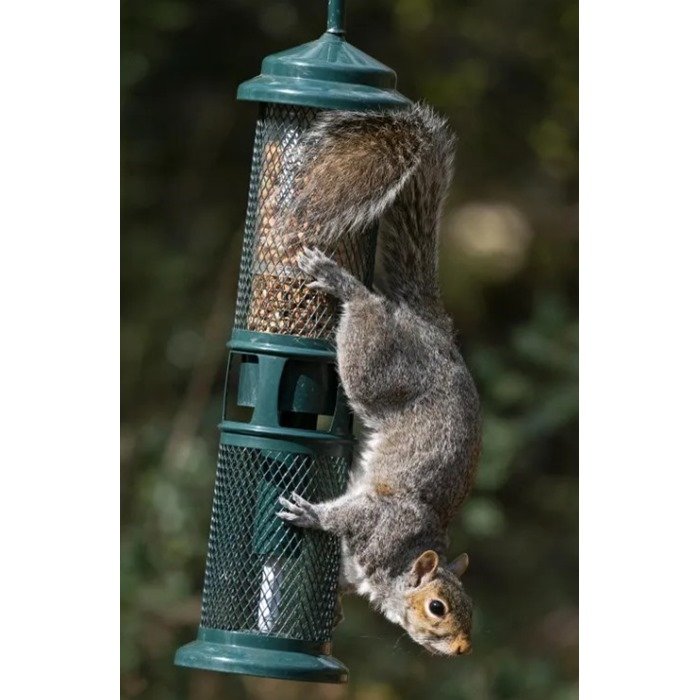
If squirrels are wiping out your peanuts before the birds get a look in, the squirrel buster peanut feeder is built for exactly that problem. It’s a weight-activated peanut feeder from Brome Bird Care, designed to let lighter birds feed while heavier squirrels trigger a closing shroud.
Manufacturer specifications indicate this feeder is made for shelled peanuts, not peanuts in the shell. That matters because the wrong food can jam the mesh, spoil faster, or block access for smaller clinging birds. Let’s start with the quick answer.
Image source: Bing (Web (fair-use with source credit))
Quick Answer
The squirrel buster peanut feeder is a squirrel-resistant feeder for shelled peanuts. It uses squirrel weight to close access ports. It’s best for woodpeckers, nuthatches, chickadees, and titmice.
It works best when hung with proper clearance.
How the Squirrel Buster Peanut Feeder Works
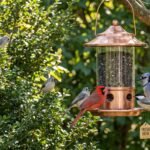
The Squirrel Buster Peanut Feeder works by using weight, not smell, sound, or chemicals. When a squirrel climbs onto the feeder, its weight pulls the outer shroud down. That movement blocks the peanut openings.
Birds are much lighter, so they can cling and feed without closing the shroud. This is why placement still matters. If a squirrel can hang from a branch and reach across, it may avoid putting full weight on the feeder.

Image source: Bing (Web (fair-use with source credit))
Think of it as a moving sleeve around a peanut mesh tube. The inner mesh holds the food. The outer shroud controls access.
For best results, use the feeder as part of a proper station:
- Hang it away from tree trunks, fences, and rooflines.
- Keep it high enough that squirrels can’t stand and feed.
- Use a pole baffle if squirrels are launching from below.
- Watch the first few days and adjust placement if needed.
The official Brome Bird Care site is the best place to confirm model-specific instructions and replacement parts. As of 2026, Brome still positions its Squirrel Buster range around mechanical squirrel exclusion rather than repellents.
If your goal is to bring in more small feeder birds, pair the peanut feeder with habitat basics like water, shrubs, and steady food sources. Those details matter when you’re building a bird-friendly yard instead of hanging one feeder and hoping for the best.
Key Features, Specs, and What You Can Feed in It
The key feature is the adjustable, weight-sensitive squirrel mechanism. That’s the part that separates it from a basic mesh peanut feeder. You’re paying for squirrel control, not just a peanut holder.
The feeder is designed for shelled peanuts. That means peanuts with the outer shell removed. Whole peanuts in the shell are too large and don’t belong in this type of mesh feeder.

Image source: Bing (Web (fair-use with source credit))
Use this food guidance:
| Food type | Good fit? | Notes |
|---|---|---|
| Shelled peanut halves | Yes | Easy for birds to pull through |
| Whole shelled peanuts | Usually | Better for larger clinging birds |
| Peanuts in the shell | No | Too bulky for the feeder |
| Salted peanuts | No | Not suitable for wild birds |
| Flavoured peanuts | No | Avoid coatings, spices, and additives |
Unsalted peanuts are the safe choice. Skip anything roasted with oil, dusted with seasoning, or made for snack bowls. Birds don’t need salt or flavourings.
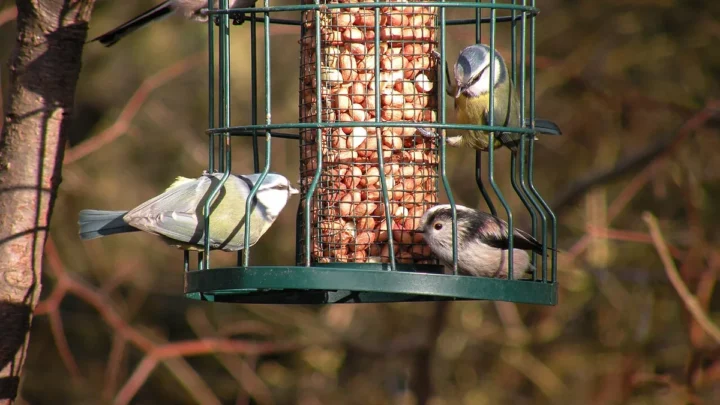
The feeder mainly suits clinging birds. You may see woodpeckers, nuthatches, chickadees, titmice, and sometimes jays depending on local species and feeder access. If you’re still learning who’s visiting, a simple backyard ID guide to common local visitors helps you match feeding style to bird behaviour.
The Cornell Lab of Ornithology’s Project FeederWatch is also a useful authority for understanding feeder birds and seasonal patterns.
Squirrel Buster Peanut Feeder vs Other Peanut Feeder Options
This feeder makes the most sense when squirrels are the main problem. If you rarely see squirrels, a simple mesh peanut feeder may be enough. If squirrels visit daily, the Squirrel Buster design becomes much more useful.
Here’s the practical comparison:
| Feeder type | Best for | Main drawback |
|---|---|---|
| Squirrel Buster Peanut Feeder | Yards with active squirrels | Higher upfront cost |
| Basic mesh peanut feeder | Low-squirrel areas | Easy for squirrels to raid |
| Suet cage | Woodpeckers and winter feeding | Squirrels may still chew or steal |
| Platform feeder | Large mixed bird feeding | Messy and open to pests |
| Tube seed feeder | Seeds, not peanuts | Not ideal for peanut pieces |
The Squirrel Buster Peanut Feeder is a better fit than a standard mesh feeder if you’re losing a lot of food. It also helps reduce chewing damage. Squirrels are persistent, and cheap plastic parts often don’t last long.
A suet cage is still worth considering if woodpeckers are your main target. Suet can be easier for some birds in cold weather. Peanuts, though, are tidy, high-energy, and popular with many clinging species.
If you’re trying to attract a wider mix, don’t rely on peanuts alone. A peanut feeder works best beside water, cover, and other suitable foods. Those basics support more steady bird activity across the yard.
Best Use Cases: Who This Feeder Is Right For
This feeder is right for you if squirrels are eating more peanuts than the birds. It’s also a strong choice if you want a cleaner, more controlled way to feed high-energy foods.
You’ll likely get the most value from it if:
- You see gray squirrels, fox squirrels, or red squirrels often.
- Your current peanut feeder gets emptied too fast.
- You want to feed woodpeckers, nuthatches, chickadees, or titmice.
- You prefer a hanging feeder over an open tray.
- You’re willing to clean it regularly.
It’s less ideal if you only want to feed larger birds. Jays may use it in some setups, but the feeder is not built as a broad platform. It favours clinging access.
It may also be overkill for a squirrel-free balcony or small patio. In that case, a compact mesh peanut feeder can do the job. Check building rules first, since some apartments restrict balcony feeding.
For new bird watchers, this feeder can teach you a lot about feeding behaviour. Watch who clings, who waits, and who dominates. Then compare those visits with beginner bird profiles so you know what you’re actually feeding.
The best setup is simple: fresh unsalted peanuts, good clearance, nearby cover, and regular cleaning. Get those right, and the feeder has a much better chance of doing what you bought it to do.
Common Problems, Setup Mistakes, and How to Avoid Them
Most problems come from placement, food choice, or old peanuts. The feeder can only block squirrels when they put enough weight on the mechanism. If they can lean in from a branch, fence, or deck rail, they may still grab food.
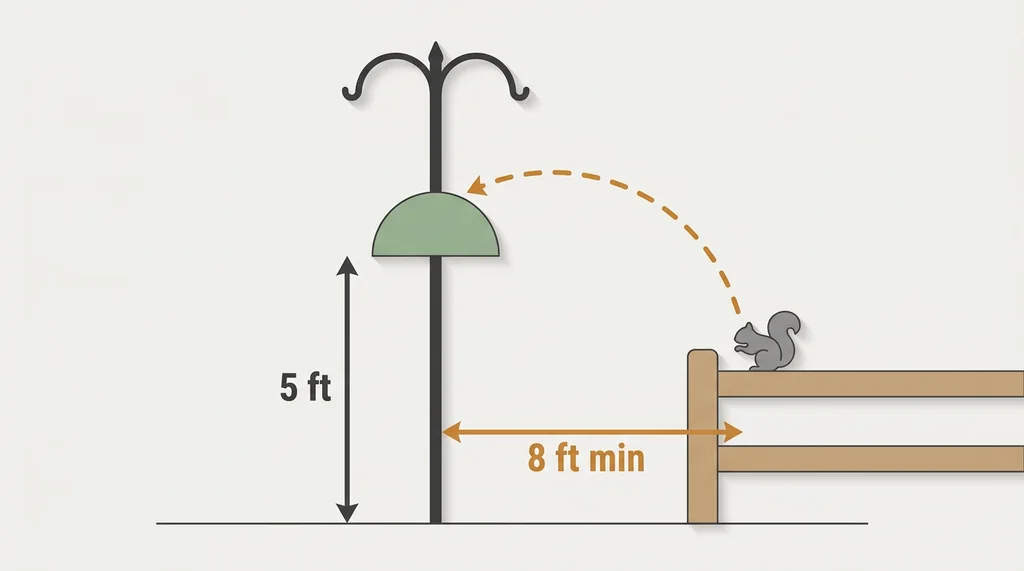
Image source: Bing (Web (fair-use with source credit))
Use this quick troubleshooting guide:
| Problem | Likely cause | What to do |
|---|---|---|
| Squirrels still feeding | Too close to a launch point | Move it farther from trees and rails |
| Birds ignore it | New food source or poor cover | Give it time and place shrubs nearby |
| Peanuts clump together | Moisture inside feeder | Empty, dry, and refill with fresh peanuts |
| Mesh looks blocked | Large pieces or stale food | Use smaller shelled peanut halves |
| Food disappears fast | Large birds or loose fragments | Watch feeding times and adjust food size |
If birds aren’t using it yet, don’t move it every few hours. Backyard birds often need several days to trust a new feeder. Nearby natural cover helps them feel safer.
If squirrels are still winning, look at the setup from their point of view. Can they jump down from above? Can they brace against a pole?
Can they stretch from a fence?
Good feeding stations usually combine fresh food, safe cover, and smart spacing. If you’re building a fuller setup, small changes like water and native plants can help bring birds closer without making the feeder work harder than it should.
Cleaning, Maintenance, and Long-Term Tips
Clean the feeder before peanuts turn stale, oily, or damp. Peanut residue can build up faster than dry seed dust. In wet weather, check it more often.
A simple routine works best:
- Empty old peanuts.
- Take apart the removable feeder sections.
- Wash with warm water and mild dish soap.
- Rinse well so no soap film remains.
- Dry every part fully before refilling.
- Check the shroud movement before hanging it again.
If you see mold, don’t top up the feeder. Empty it fully and clean it first. Moldy peanuts can carry toxins, and they’re not worth the risk for wild birds.
Store peanuts in an airtight container in a cool, dry place. Buy smaller amounts if your feeder traffic is light. Fresh food beats bulk savings when peanuts sit too long.
Also inspect the hanger, lid, mesh, and moving shroud. The squirrel-proof function depends on free movement. Sticky residue, bent parts, or trapped peanut pieces can stop the closure from working properly.
Window placement deserves attention too. If birds leave the feeder and fly toward glass, add window decals or other collision-reduction markers. A great feeding station should attract birds without creating a new hazard.
Frequently Asked Questions
What birds use a peanut feeder?
Woodpeckers, nuthatches, chickadees, titmice, and some jays commonly use peanut feeders. The exact mix depends on your region and habitat. Clinging birds do especially well because they can grip the mesh and pull out small peanut pieces.
Can I put peanuts in the shell in it?
No, use shelled peanuts unless the manufacturer says otherwise for your exact model. Peanuts in the shell are too large for this feeder style. They can block the mesh and stop birds from feeding properly.
Unsalted shelled halves are usually the easiest option.
Why are squirrels still getting food?
Squirrels may be reaching from a nearby branch, fence, wall, or pole without triggering the shroud. Move the feeder so they must climb onto it fully. If they attack from below, add a pole baffle and increase the clearance around the feeding station.
How often should I clean it?
Clean it every couple of weeks in normal conditions, and more often during wet or humid weather. Peanuts spoil faster than many dry seed mixes. If food smells stale, looks damp, or shows mold, empty the feeder and wash it before refilling.
Is this feeder good for beginners?
Yes, it’s beginner-friendly if squirrels are a real problem in your yard. It needs proper placement and regular cleaning, but the basic operation is simple. New bird watchers may also enjoy matching feeder visitors with easy bird ID clues.

Similar Posts