How High Does a Bird Fly
Ever watched a bird soar overhead and wondered just how high it’s flying? You’re not alone. The question "how high does a bird fly" unlocks a world of extremes, from backyard sparrows to Himalayan migrants.
While most birds cruise below 500 meters, some species push the limits of physics and biology to reach astonishing altitudes.
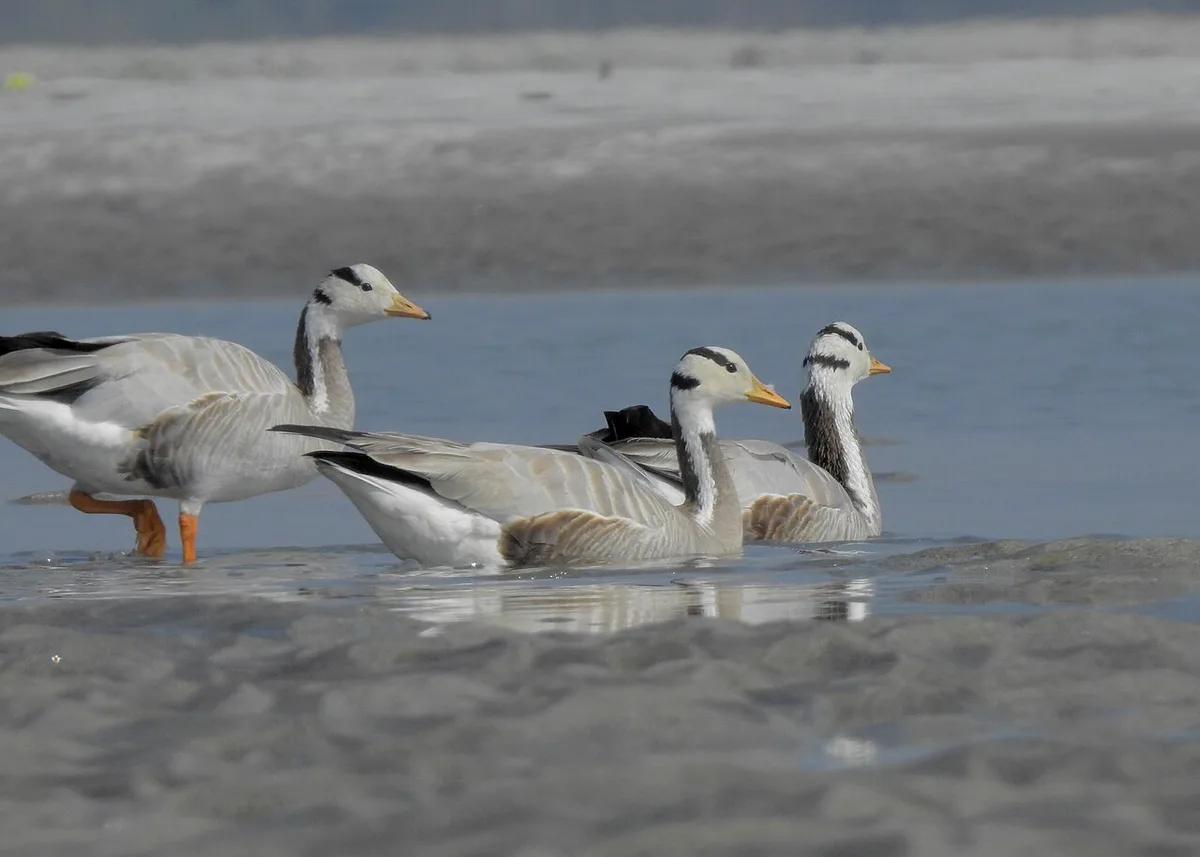
Rüppell’s griffon vulture holds the record: one collided with a plane at 11,300 meters (37,000 feet), as documented by the Smithsonian Institution. Bar-headed geese migrate over the Himalayas at 7,200 meters, relying on specialized hemoglobin to survive thin air. These feats aren’t just impressive, they reveal how evolution shapes survival.
Let’s explore what makes birds such high-flying marvels.
Quick Answer: Highest Flying Birds Reach 11,300 Meters!
Birds’ flight altitudes vary dramatically. Most species fly under 500 meters, but elite high-fliers like Rüppell’s griffon vultures and bar-headed geese exceed 7,000 meters, with the record at 11,300 meters. Altitude depends on species, migration needs, and adaptations.
Bar-headed geese migrate over the Himalayas at 7,200 meters.
Image source: Wikimedia Commons / Tisha Mukherjee (CC BY-SA)
Why Bird Altitude Matters
High-altitude flight isn’t just about bragging rights. It’s critical for:
- Migration: Avoiding mountain ranges or exploiting wind currents.
- Predator evasion: Eagles and vultures stay high to spot threats.
- Energy efficiency: Thin air reduces drag but demands more oxygen.
Understanding these altitudes helps scientists protect migratory routes and inspires aviation engineers designing drones and aircraft.
Factors Affecting Bird Flight Altitude
Three key forces shape how high birds can fly:
- Air Density: Thinner air at high altitudes reduces lift, forcing birds to work harder.
- Temperature: Below -40°C (-40°F), even feathers struggle to insulate.
- Oxygen Levels: Birds like bar-headed geese have evolved hemoglobin that absorbs oxygen 3x more efficiently than humans’.
Weather patterns and wing shape also play roles, long, broad wings (e.g., albatrosses) excel at gliding, while shorter wings (e.g., robins) prioritize agility over altitude.
Adaptations for High-Altitude Flight
Birds don’t just "tough it out" at high altitudes, they’re biologically engineered for it. Key adaptations include:
- Dense Feathers: Trap body heat in subzero temperatures.
- Efficient Lungs: Extract maximum oxygen from thin air.
- Behavioral Tricks: Flying at night or dawn when air is smoother.
For example, bar-headed geese time their Himalayan crossings to avoid turbulence, using star navigation when clouds obscure landmarks. These traits aren’t accidental, they’re millions of years of evolution in action.
Advantages of Flying High
Why bother with the thin air and freezing temps? High altitudes offer:
- Unmatched Visibility: Vultures spot carrion from miles away.
- Favorable Winds: Migratory birds ride jet streams to conserve energy.
- Predator-Free Zones: Few animals threaten birds above 5,000 meters.
However, these benefits come with trade-offs: high-altitude specialists like the bar-headed goose can’t compete with agile lowland birds in dense forests. It’s a classic case of specialization.
Risks and Challenges
Flying high is perilous. Birds face:
- Oxygen Deprivation: Without adapted hemoglobin, cells suffocate.
- Extreme Cold: Frostbite risks even with insulated feathers.
- UV Radiation: Intense sunlight at altitude damages skin and eyes.
Rüppell’s vultures mitigate this by molting in high-UV environments, but one wrong move, like colliding with a plane, can be fatal. As of 2026, bird strikes remain a challenge for aviation safety, per FAA reports.
Tracking Bird Altitudes: A Real-World Example
Scientists use GPS trackers to study high-flying birds. One landmark study on bar-headed geese revealed:
- Nonstop Flights: 8, 10 hours over the Himalayas.
- Heart Rates: 4x resting levels during ascent.
- Navigation: Reliance on stars when clouds block terrain.
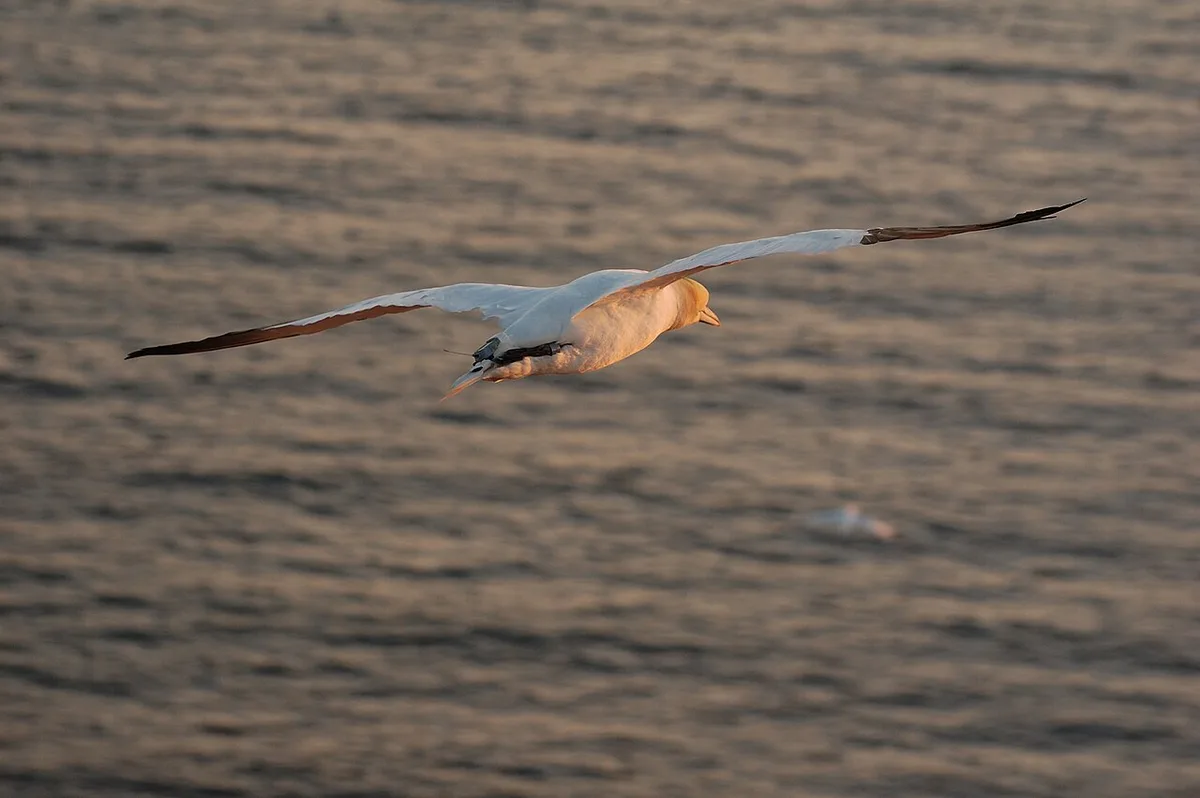
GPS trackers reveal migration altitudes and routes.
Image source: Wikimedia Commons / Stefan Garthe, Verena Peschko, Ulrike Kubetzki, Anna-Marie Corman (CC BY)
This data, published in Nature, reshaped our understanding of avian endurance. It also highlights how human technology, like lightweight GPS tags, unlocks nature’s secrets.
Birders, Researchers, and Aviation Enthusiasts
Whether you’re spotting birds in your backyard or designing drones, high-altitude flight fascinates us all. For birders, knowing altitude ranges helps identify species (e.g., low-flying robins vs. soaring hawks). Researchers use this data to protect migration corridors, while engineers mimic bird aerodynamics for efficient aircraft.
Next time you see a speck in the sky, remember: it might be a record-breaker pushing the limits of biology. Nature’s engineers never cease to amaze.
Use Cases / Best For / Who It's Right For
The study of bird flight altitudes isn’t just for ornithologists. It’s relevant to:
- Birders: Identifying species by their flight patterns.
- Researchers: Studying migration routes and climate impacts.
- Aviation Enthusiasts: Understanding aerodynamics and flight limits.
- Drone Designers: Mimicking bird flight for efficient drones.
For example, a birder might use altitude data to distinguish between similar-looking birds in flight. Researchers track migratory birds to understand climate change impacts on their routes.
Mistakes to Avoid / Common Errors
Even experts make mistakes. Common pitfalls include:
- Ignoring Weather: High winds or storms can derail even the strongest flyers.
- Overlooking Adaptations: Assuming all birds can reach the same altitudes.
- Misinterpreting Data: Drawing incorrect conclusions from GPS tracking.
For instance, a researcher might misinterpret a bird’s sudden descent as a sign of injury, when it could be a natural behavior to avoid predators.
Costs / Pricing / Data / Specs
While bird flight data is often free (e.g., from eBird or Cornell Lab of Ornithology), some specialized equipment isn’t. GPS trackers for research can cost $1,000+ each, plus data analysis fees.
For hobbyists, a basic birdwatching kit (binoculars, field guide) starts at $50, with more advanced gear (e.g., spotting scopes) costing $200, $1,000.
Expert Tips / Pro Advice
From seasoned ornithologists to drone engineers, here are some insider tips:
- Use Multiple Data Sources: Cross-verify GPS data with weather reports and bird behavior observations.
- Consider Wing Shape: Long, broad wings are ideal for gliding at high altitudes.
- Study Migration Patterns: Many high-flying birds are migratory, so understanding their routes is key.
For instance, a drone designer might study the wing shape of albatrosses to optimize their aircraft’s aerodynamics.
Safety / Legal / Compliance / Warnings
While bird flight study is generally safe, always:
- Respect Wildlife: Never disturb birds during migration or nesting.
- Follow Regulations: Obtain permits for research activities.
- Use Proper Equipment: Ensure GPS trackers are safe for birds.
For example, researchers must follow strict guidelines when attaching trackers to endangered species.
Frequently Asked Questions
How do birds know when to fly high?
Birds use a combination of instinct, experience, and environmental cues to determine flight altitude. They may adjust their altitude based on wind conditions, temperature, and the presence of predators or prey.
What are the highest flying birds?
The highest flying birds include the Rüppell’s griffon vulture, which holds the record at 11,300 meters, and the bar-headed goose, which migrates over the Himalayas at 7,200 meters.
How do birds survive at high altitudes?
Birds have several adaptations to survive at high altitudes, including specialized hemoglobin that efficiently absorbs oxygen, dense feathers for insulation, and behavioral tricks like flying at night or dawn when air is smoother.
What limits bird flight altitude?
Factors limiting bird flight altitude include thin air, extreme cold, and UV radiation. Birds must balance these challenges with their energy reserves and ability to navigate.
How do scientists track bird altitudes?
Scientists use GPS trackers to monitor bird flight altitudes and migration routes. These devices provide real-time data on bird movements, allowing researchers to study their behavior and adaptations in detail.

Similar Posts