Bird Calls How To
Ever wondered what those birds outside your window are saying? Learning to identify bird calls is like unlocking a secret language, but it can feel overwhelming at first. Whether you're a nature enthusiast or just curious, mastering "bird calls how to" opens up a whole new way to connect with the outdoors.
As of 2026, tools like the Merlin Bird ID app (Cornell Lab of Ornithology) have helped over 10 million users identify birds by sound, proving that technology can be a game-changer. But even without apps, simple techniques can get you started. Let’s dive in.
Struggling to Identify Bird Calls?
Most beginners hit the same wall: hearing a beautiful call but having no clue what bird made it. Common frustrations include confusing similar-sounding species (like sparrows vs. finches) or missing subtle cues like rhythm or pitch. Without a systematic approach, it’s easy to feel stuck, but small, consistent steps make all the difference.
Quick Answer: Start with These 5 Steps
To begin identifying bird calls:
- Listen actively in quiet outdoor spaces.
- Use the Merlin Bird ID app to record and ID calls.
- Learn 5 common calls (e.g., robin, cardinal).
- Practice mimicking simple calls like chickadees.
- Join a local birding group for hands-on learning.
Bird Calls: A Language of Nature
Birds don’t just sing for fun, calls serve critical roles. Mating calls attract partners, alarm calls warn of predators, and contact calls keep flocks together. Each species has a unique "voice," shaped by habitat, time of day, and even regional dialects.
For example, a Northern Cardinal’s clear whistle ("birdie-birdie") sounds distinct from a Barred Owl’s haunting "who-cooks-for-you?". Understanding these patterns turns noise into meaningful communication.
Key Features of Bird Calls
Not all calls are created equal. Focus on these traits:
- Pitch: High (e.g., chickadee) vs. low (e.g., owl).
- Rhythm: Rapid chirps (sparrows) vs. slow hoots (owls).
- Repetition: Some calls repeat in patterns (e.g., “cheer-ee-o” for robins).
- Timbre: Harsh (crows) vs. melodic (thrushes).
- Context: Dawn chorus vs. evening calls; forest vs. wetland sounds.
Pro tip: Spectrograms (visual sound graphs) show call structures, but your ears are the best tool, start simple!
Why Learn Bird Calls?
Beyond the joy of identification, recognizing bird calls offers practical benefits:
- Conservation impact: Track local bird populations by their calls.
- Nature immersion: Turn hikes into interactive experiences.
- Stress relief: Studies show nature sounds reduce anxiety (per NIH research).
- Educational value: Teach kids (or yourself!) about ecosystems.
However, misidentification can lead to unnecessary worry (e.g., mistaking a harmless call for a dangerous species). Always cross-check with apps or field guides to stay accurate.
Your Bird Call Learning Journey
Ready to get started? Follow this step-by-step plan:
Step 1: Gear Up (Minimal Tools Needed)
- Notebook: Jot down call descriptions (e.g., “short, rising whistle”).
- Smartphone app: Merlin Bird ID or eBird for instant IDs.
- Field guide: Peterson Field Guide to Birds for regional calls.
- Recordings: Use Macaulay Library’s free audio database for reference.
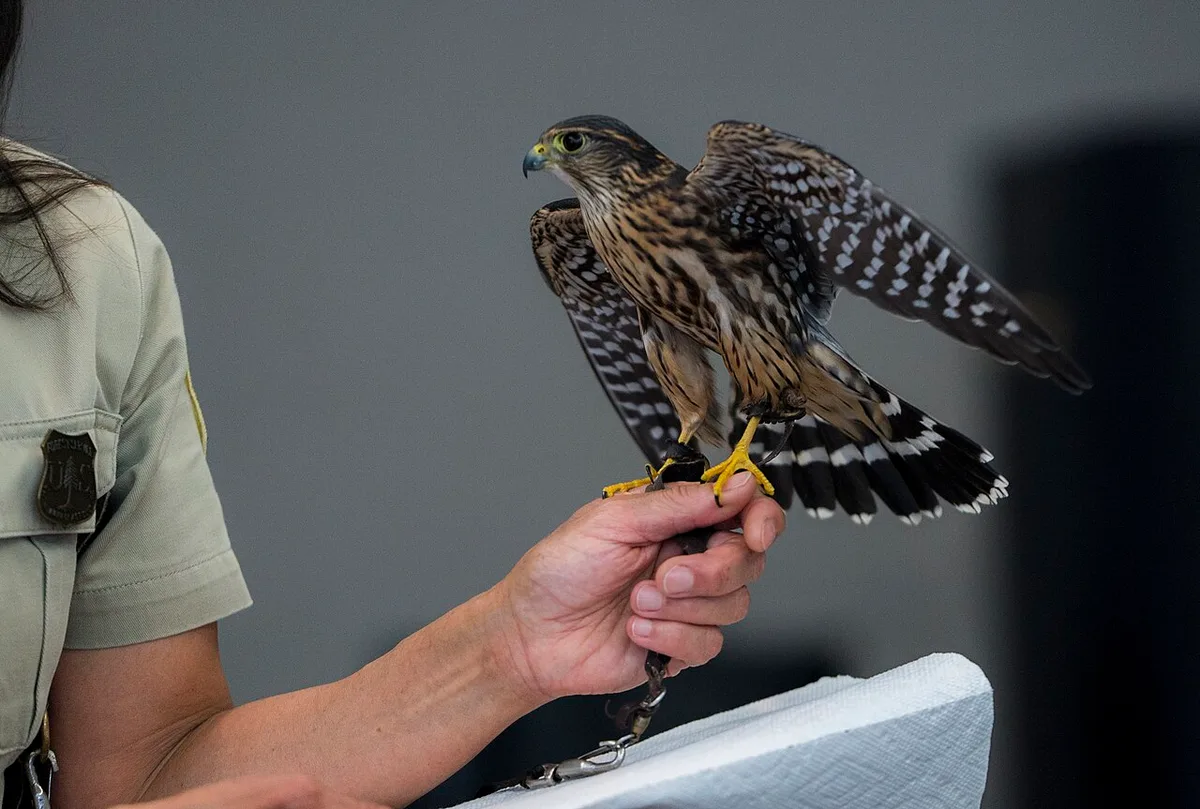
Merlin Bird ID app in action (Source: Wikimedia Commons / Forest Service, USDA)
Step 2: Listen Like a Pro
- Find a quiet spot at dawn (birds are most vocal then).
- Close your eyes to focus on sounds without visual distractions.
- Note patterns: Is the call repetitive? Melodic? Harsh?
- Record snippets on your phone for later review.
Step 3: Master 5 Common Calls
Start with these easy-to-learn calls:
- American Robin: “Cheer-ee-o” (upward-rising whistle).
- Northern Cardinal: Clear “birdie-birdie” whistle.
- Black-Capped Chickadee: Rapid “chick-a-dee-dee”.
- House Sparrow: Simple, repetitive chirps.
- Barred Owl: Distinctive “who-cooks-for-you?” hoot.
Practice tip: Play recordings from Macaulay Library and mimic them, you’ll train your ear faster.
Step 4: Ethical Mimicking (Yes, Birds May Respond!)
- Pishing: Make a soft “shhhh” sound to attract curious birds like chickadees.
- Whistling: Try simple cardinal or robin calls.
- Avoid nesting areas: Never play recordings near nests to prevent stress.
Step 5: Join the Community
Learning solo is great, but groups accelerate progress:
- Local bird walks: Check Audubon Society chapters.
- Online forums: Subreddits like r/whatsthisbird.
- Citizen science: Contribute to eBird’s global database.
Who Should Learn Bird Calls?
This skill suits anyone curious about nature, but it’s especially valuable for:
- Hikers/campers: Identify birds without seeing them.
- Gardeners: Attract specific birds with feeder-friendly calls.
- Parents/teachers: Turn outdoor time into a learning adventure.
- Conservationists: Monitor ecosystems through bird activity.
Pitfalls in Bird Call Identification
Even experts make mistakes. Avoid these:
- Rushing the process: Learning calls takes weeks, not days.
- Ignoring context: A call in the desert differs from one in a rainforest.
- Overlooking body language: Birds use wing flicks or tail movements alongside calls.
- App over-reliance: Use tools as guides, not final answers, verify with field guides.
Frequently Asked Questions
How long does it take to learn bird calls?
Most beginners recognize 5, 10 common calls within 2, 3 months of consistent practice. Mastery takes years, but progress is quick at first.
What’s the best time to listen?
Dawn (4, 7 AM) is ideal, birds sing most actively then to establish territory and attract mates.
Can I learn calls without an app?
Absolutely! Start with a field guide and recordings. Apps just speed up the process.
Why do some birds sound different in my area?
Regional dialects exist! For example, Eastern vs. Western meadowlarks have distinct calls.
Is mimicking calls harmful?
Not if done ethically. Avoid nesting sites, keep sessions short, and never play recordings excessively.
Ready to Start Your Bird Call Adventure?
Learning bird calls isn’t about memorizing every chirp, it’s about tuning into nature’s rhythm. Start small, use tools wisely, and embrace the journey. Soon, you’ll hear the world in a whole new way.
Grab your notebook, head outside, and let the chorus begin! 🌿
Use Cases / Best For / Who It’s Right For
Learning bird calls isn’t just for ornithologists, it’s a skill that enriches everyday life. Gardeners can attract specific birds (e.g., hummingbirds) by mimicking their calls near feeders. Hikers and campers gain a stealthy way to spot hidden birds, while parents and educators turn nature walks into interactive lessons. Even urban dwellers can identify common city birds like pigeons or sparrows, fostering a deeper connection to local ecosystems. For conservationists, recognizing calls helps track species health, making this skill both personal and planetary.
Pitfalls in Bird Call Identification
Even seasoned birders stumble. Misidentification tops the list, confusing a House Finch’s raspy call with a Purple Finch’s smoother notes is common. Background noise (wind, traffic) can mask subtle cues, while regional variations (e.g., Eastern vs. Western meadowlarks) trip up newcomers. Over-reliance on apps also risks missing contextual clues, like a bird’s habitat or time of day.
Always cross-check with field guides or experts to stay accurate.
Costs / Pricing / Data / Specs
Getting started costs next to nothing:
- Free tools: Merlin Bird ID app, Macaulay Library, eBird.
- Field guides: $15, $30 for regional books (e.g., Sibley’s Birds).
- Recorders: Smartphone apps suffice; dedicated devices (like the Olympus WS-853) run $80, $200 for audiophiles.
Pro tip: Invest in a pair of lightweight binoculars ($50, $150) to spot birds once you hear them, brands like Nikon or Celestron offer solid entry-level options.
Expert Tips / Pro Advice
Elevate your skills with these insider tricks:
- Focus on rhythm: Many calls follow patterns (e.g., chickadees’ “fee-bee” vs. “chick-a-dee-dee” alarm calls).
- Use mnemonics: Link calls to phrases (e.g., “Who cooks for you?” for Barred Owls).
- Record and review: Compare your recordings to library samples to spot mistakes.
- Join a mentor: Local birding groups often pair newbies with experts for guided outings.
- Practice daily: Even 10 minutes of focused listening sharpens your ear over time.
Safety / Legal / Compliance / Warnings
Ethical birding protects both you and wildlife:
- Avoid nesting areas: Never play calls near nests, it stresses birds and may violate laws like the Migratory Bird Treaty Act.
- Stay on trails: Protect habitats and avoid disturbing ground-nesting species.
- Respect private property: Always ask permission before birding on private land.
- Limit recordings: Prolonged playback can disrupt bird behavior; use sparingly.
When in doubt, follow the Audubon Society’s birding ethics guidelines to minimize impact.
Maintenance / Long-Term Optimization
Keep your skills sharp with ongoing practice:
- Update apps/guides: Bird populations shift; stay current with regional data.
- Review seasonal calls: Migration brings new species, refresh your knowledge yearly.
- Contribute to science: Log sightings on eBird to aid conservation efforts.
- Attend workshops: Many parks offer advanced classes on topics like bird behavior or acoustics.
Long-term, consider specializing in a niche (e.g., waterfowl calls or nocturnal birds) to deepen expertise.
Real Scenarios / Case Examples
Real-world wins prove this skill’s value:
- A hiker in Maine used a recorded Black-throated Blue Warbler call to lure the bird into view, confirming a rare sighting.
- Urban birders in Chicago mapped downtown peregrine falcons by tracking their high-pitched “kek-kek-kek” calls, aiding local conservation.
- A teacher in Texas turned her classroom’s backyard into a lab, teaching students to ID 15+ species by sound in one semester.
FAQs
How do I tell if a call is from a bird or another animal?
Birds’ calls are often melodic, repetitive, or whistled, while mammals (e.g., squirrels, frogs) produce harsher, less structured sounds. Apps like Merlin Bird ID can help distinguish them.
Can I learn calls if I have hearing loss?
Absolutely! Visual tools like spectrograms (soundwave graphs) and lip-reading bird behaviors (e.g., wing flicks during calls) aid identification. Many birding groups also accommodate diverse abilities.
What’s the rarest call I might hear?
The Ivory-billed Woodpecker, once thought extinct, has a distinctive “kent” call, though sightings are debated, dedicated birders still search for it.
Do birds understand human mimicry?
Not exactly, but they may investigate unfamiliar sounds. Pishing (a soft “shhh” noise) often attracts curious chickadees or warblers, though it’s not a call mimic.
How do climate change affect bird calls?
Shifting habitats force birds to alter migration patterns, leading to new regional calls. For example, Red-winged Blackbirds now appear farther north than decades ago, per Cornell Lab data.
Final Recommendation / Verdict / Decision Guide
Ready to commit? Here’s your roadmap:
- Start simple: Master 5 common calls using free apps and guides.
- Practice daily: Dedicate 10, 15 minutes to focused listening.
- Join a community: Local groups or online forums accelerate learning.
- Stay ethical: Prioritize bird welfare over "getting the shot."
- Have patience: Progress takes time, enjoy the journey!
If you need further assistance or have additional questions, feel free to ask!

Similar Posts