A bird feeding tube is one of the simplest ways to feed backyard birds without turning your garden into a seed buffet for every squirrel and large bird nearby. The tricky part is choosing the right tube, because port size, seed type, perch design, and cleaning access all affect which birds show up.
Most tube bird feeders hold about 0.5 to 5 pounds of seed, with 2 to 12 feeding ports depending on the model. A finch feeder and a sunflower seed tube feeder may look similar, but they’re built for different seed and different birds. Let’s make the choice easier.
Quick Answer
A bird feeding tube is a vertical seed feeder for wild birds. It has feeding ports, perches, and a clear seed reservoir. Choose small ports for Nyjer seed and finches.
Choose larger ports for sunflower seed and mixed seed.
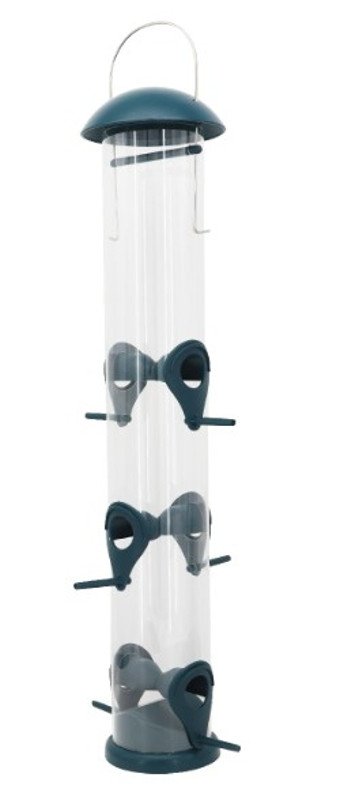
Image source: Bing (Web (fair-use with source credit))
How Tube Bird Feeders Work and Why the Details Matter
A tube bird feeder is a vertical seed reservoir with small openings where birds pull seed out. Most have perches beside each feeding port, so birds can land, eat, and move on. The clear tube helps you see seed levels and spot wet or moldy seed early.
The design matters because birds feed in different ways. Finches can use tiny Nyjer seed ports. Chickadees, titmice, nuthatches, and goldfinches usually handle classic tube feeders well.
Cardinals often prefer a tray or longer perch because they’re larger and less agile on narrow perches.
Tube feeders also help control waste. Seed comes out through ports instead of sitting loose on an open platform. That means less spillage, fewer hull piles, and less food on the ground for rodents.
Still, no tube feeder solves every problem. Rain can soak seed if drainage is poor. Squirrels can chew weak plastic.
Large birds can crowd the feeder if the ports and perches suit them.
As of 2026, most useful tube feeders fall into three practical groups:
| Tube feeder type | Best for | Common seed |
|---|---|---|
| Small-port finch tube | Goldfinches and siskins | Nyjer seed |
| Standard seed tube | Chickadees, titmice, nuthatches | Black oil sunflower |
| Caged tube feeder | Small birds in squirrel-heavy yards | Sunflower hearts or blends |
The right choice starts with the birds you want to feed, not the prettiest feeder on the shelf.
Key Features to Compare Before Buying a Tube Bird Feeder
The most important features are port size, perch style, cleaning access, drainage, and squirrel resistance. If those are wrong, the feeder can be frustrating even when it looks sturdy.
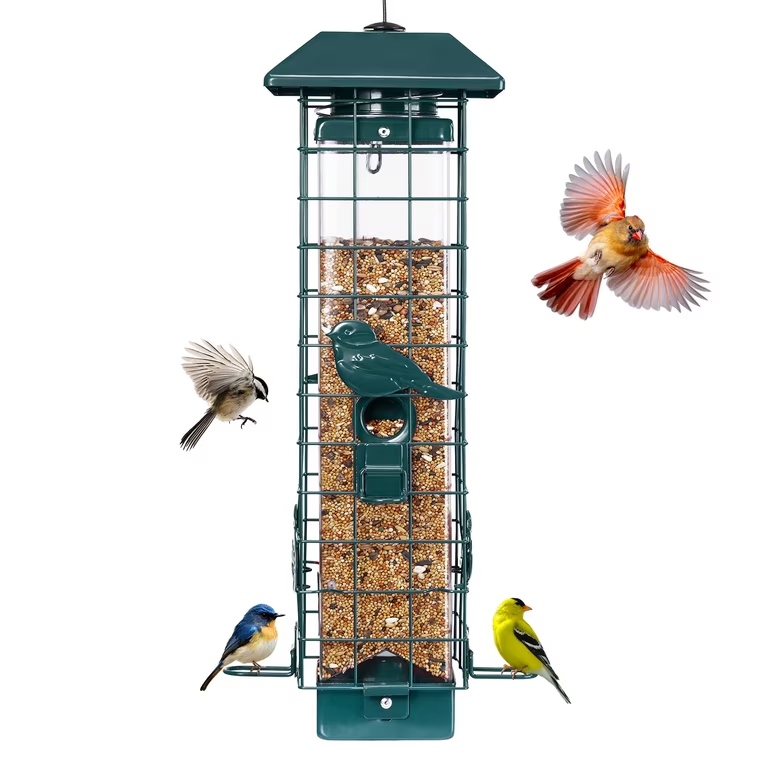
Image source: Bing (Web (fair-use with source credit))
Start with feeding ports. Tiny slit-style ports are made for Nyjer seed. Larger round or oval ports suit black oil sunflower seed, sunflower hearts, safflower, or quality mixed seed.
If the port is too large, small seed spills. If it’s too small, sunflower seed clogs.
Next, check the perches. Short perches favor smaller birds. Longer perches and trays make feeding easier for cardinals, grosbeaks, and other larger birds.
That can be useful or annoying, depending on your goal.
Materials matter too. Polycarbonate and acrylic tubes give clear seed visibility. Metal ports, metal caps, and powder-coated metal cages usually handle squirrels and weather better than thin plastic parts.
Look for these practical details:
- Removable base for proper cleaning
- Drainage holes under the seed area
- Locking lid to slow squirrels and raccoons
- Wide-mouth opening for easy filling
- UV-resistant tube material
- Replacement parts from the manufacturer
- Seed tray only if you’ll clean it often
The Cornell Lab of Ornithology’s Project FeederWatch is a helpful source for learning how feeder type, food, and placement affect backyard bird activity. Their work supports a simple point: feeder design changes which birds use it.
Best Bird Feeding Tube by Bird, Seed Type, and Yard Setup
The best tube feeder is the one that matches your birds, seed, and local problems. A feeder for goldfinches in a quiet garden won’t be the same as one for chickadees in a squirrel-heavy yard.
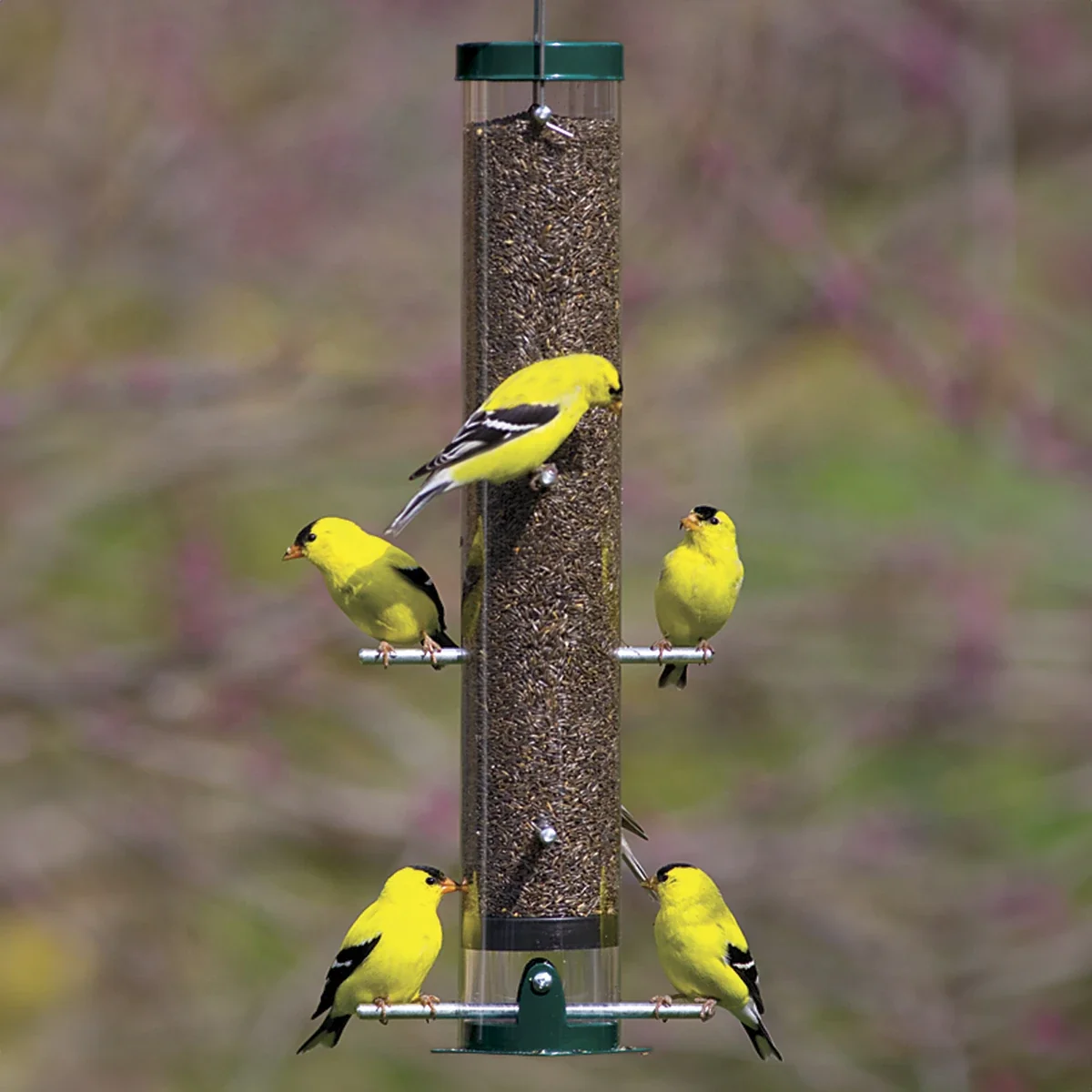
Image source: Bing (Web (fair-use with source credit))
If you want finches, choose a Nyjer seed tube feeder. These feeders use very small ports that stop tiny seed from pouring out. Goldfinches, pine siskins, and redpolls often use them well, especially when the seed is fresh.
If you want a wider mix of songbirds, choose a standard sunflower seed tube feeder. Black oil sunflower seed attracts chickadees, titmice, nuthatches, finches, and many woodpeckers. Sunflower hearts create less mess, but they spoil faster when wet.
If squirrels are the main problem, use a caged tube feeder or a pole-mounted feeder with a baffle. A cage lets small birds pass through while blocking many larger birds and squirrels. A proper pole setup often works better than hanging a feeder from a tree branch.
Use this quick match:
| Your goal | Choose this tube feeder | Avoid |
|---|---|---|
| Attract finches | Small-port Nyjer tube | Large mixed-seed ports |
| Feed many songbirds | Standard sunflower tube | Cheap blends with filler seed |
| Reduce squirrel access | Caged or baffled tube | Low branch hanging spots |
| Feed from a balcony | Compact hanging tube | Oversized tray feeders |
| Reduce mess | Sunflower hearts tube | Millet-heavy mixes |
If birds ignore the feeder, don’t assume the feeder is bad. The seed may be stale. The location may feel exposed.
Local birds may also prefer a different food.
Tube Feeder vs Other Bird Feeder Types
A tube feeder is best for controlled seed feeding, especially for small songbirds. Other feeder styles work better when you want different birds, different foods, or a more open feeding setup.
Hopper feeders hold more seed and attract a broader mix of birds. They’re useful if you don’t want to refill often. The tradeoff is more mess, more large-bird access, and more seed exposure in damp weather.
Platform feeders are the easiest for birds to use. Cardinals, doves, jays, and sparrows often prefer them. They’re also the messiest, since seed, droppings, and rain can collect on the same surface.
Suet feeders serve a different purpose. They’re great for woodpeckers, nuthatches, wrens, and chickadees, especially in cooler weather. They don’t replace a seed tube, but they pair nicely with one.
Here’s the clean comparison:
| Feeder type | Best for | Main drawback |
|---|---|---|
| Tube feeder | Small songbirds and seed control | Needs port and seed matching |
| Hopper feeder | Larger seed capacity | Can attract squirrels and big birds |
| Platform feeder | Easy access for many birds | Higher mess and disease risk |
| Suet feeder | Woodpeckers and clinging birds | Not for loose seed |
| Window feeder | Close-up viewing | Needs careful window placement |
For most yards, a tube feeder is the best starting point. Add other feeder types once you know which birds are visiting and what problems you’re trying to solve.
Common Bird Feeding Tube Problems and How to Avoid Them
The biggest tube feeder problems are wet seed, clogged ports, squirrels, poor placement, and dirty parts. Most are easy to prevent once you know what causes them.
Wet seed is the most urgent issue. Damp seed can clump, mold, and block feeding ports. Choose a feeder with drainage holes, avoid overfilling in rainy weather, and dump spoiled seed right away.
Clogging usually comes from the wrong seed. Nyjer tubes need Nyjer seed. Standard tubes need seed that fits the port size.
Sunflower hearts work well, but they can cake up if moisture gets inside.
Squirrels need a practical plan, not wishful thinking. If they can jump from a fence, tree, roofline, or railing, they’ll try. A pole-mounted feeder with a baffle is usually more reliable than a hanging feeder placed near launch points.
Placement also affects bird safety. The U.S. Fish and Wildlife Service shares broader wild bird guidance through fws.gov, and local wildlife agencies may post disease alerts.
If feeders are linked to sick birds in your area, follow local guidance and take them down when advised.
Avoid these common mistakes:
- Filling a large tube during wet weather
- Using stale Nyjer seed
- Buying a feeder that doesn’t come apart
- Hanging the feeder too close to squirrel launch points
- Letting hulls and dropped seed build up below
- Placing feeders where cats can hide nearby
A good tube feeder should make feeding easier, cleaner, and safer. If it creates constant mess or spoiled seed, adjust the seed, placement, or feeder style.
Setup, Cleaning, and Maintenance Tips That Actually Matter
Good setup starts with placement. Put the feeder where birds can reach cover, but not where cats can hide underneath. A spot near shrubs is useful, but avoid dense low cover right below the feeding area.
For squirrel control, distance matters. Aim for about 5 feet off the ground and 7 to 10 feet from fences, roofs, trees, or railings. If that’s not possible, use a pole-mounted baffle below the feeder.

Image source: Bing (Web (fair-use with source credit))
Don’t fill a large tube to the top unless birds empty it quickly. In damp weather, smaller refills are safer. Fresh seed beats full seed every time.
A simple maintenance rhythm works best:
| Task | How often | Why it matters |
|---|---|---|
| Check seed condition | Every few days | Spots clumps, mold, and damp seed |
| Brush loose debris | Weekly | Keeps ports flowing |
| Wash feeder | Every 1 to 2 weeks | Reduces droppings and spoiled seed |
| Deep clean after sick birds | Immediately | Helps reduce disease spread |
Wash removable parts with hot soapy water. Scrub ports, seams, caps, and the base where seed dust collects. Rinse well and dry every part fully before refilling.
For disinfection, many bird organizations recommend a diluted bleach solution of 1 part bleach to 9 parts water. Use it after visible contamination, heavy traffic, or disease concerns. Rinse thoroughly afterward, then let the feeder air-dry.
Store bird seed in a sealed container. Keep it cool, dry, and away from rodents. If Nyjer seed smells stale or birds suddenly ignore it, replace it with a fresh batch.
Frequently Asked Questions
What seed should I put in a tube bird feeder?
Use seed that matches the port size. Small slit ports are for Nyjer seed and finches. Standard ports work well with black oil sunflower, sunflower hearts, safflower, or better mixed seed.
Avoid cheap mixes packed with red millet and cracked corn if you want less mess under the feeder.
Why are birds not using my tube feeder?
Birds may ignore it because the seed is stale, the feeder is too exposed, or the port style doesn’t suit local birds. Move it near safe cover and try black oil sunflower seed. Give birds several days to find it, especially if the feeder is new.
How often should I clean a bird feeding tube?
Clean it every 1 to 2 weeks in normal conditions. Clean more often during rain, warm weather, or heavy bird activity. If seed looks wet, clumped, moldy, or dirty, empty the feeder right away.
Dry every part fully before adding fresh seed.
Are tube feeders good for cardinals?
Standard tube feeders are not always ideal for cardinals. Cardinals are larger birds and usually prefer a tray, hopper, or platform feeder. If you want to use a tube, choose one with longer perches or a seed tray.
Even then, some cardinals may skip it.
How do I stop squirrels from getting into a tube feeder?
Use a pole-mounted feeder with a baffle and place it away from jump points. Hanging from a tree often gives squirrels an easy route. Caged tube feeders can also help, especially when you want small birds to feed while blocking larger animals.
