If you’ve put out seed and watched nothing happen, you’re not alone. The short answer to “how do birds find a bird feeder” is that they spot it while moving through their normal feeding routes. Once they learn the feeder is safe and reliable, they’re more likely to return.
Most feeder birds rely on vision, routine, and cues from other birds. A practical window-safety rule is placing feeders either within 3 feet of glass or more than 30 feet away. That helps reduce collision risk while still giving birds a clear, familiar place to feed.
Quick Answer
How do birds find a bird feeder? They mostly find it by sight. Birds notice food, movement, and other feeding birds.
Safe placement helps them investigate. Repeat visits turn the feeder into a routine stop.

Image source: Bing (Web (fair-use with source credit))
How Birds Notice a New Feeder in the First Place
Birds don’t need a signpost. They’re already scanning trees, fences, shrubs, lawns, patios, and garden beds while they search for seeds, insects, berries, water, and cover. A feeder gets noticed when it sits near those normal travel routes.
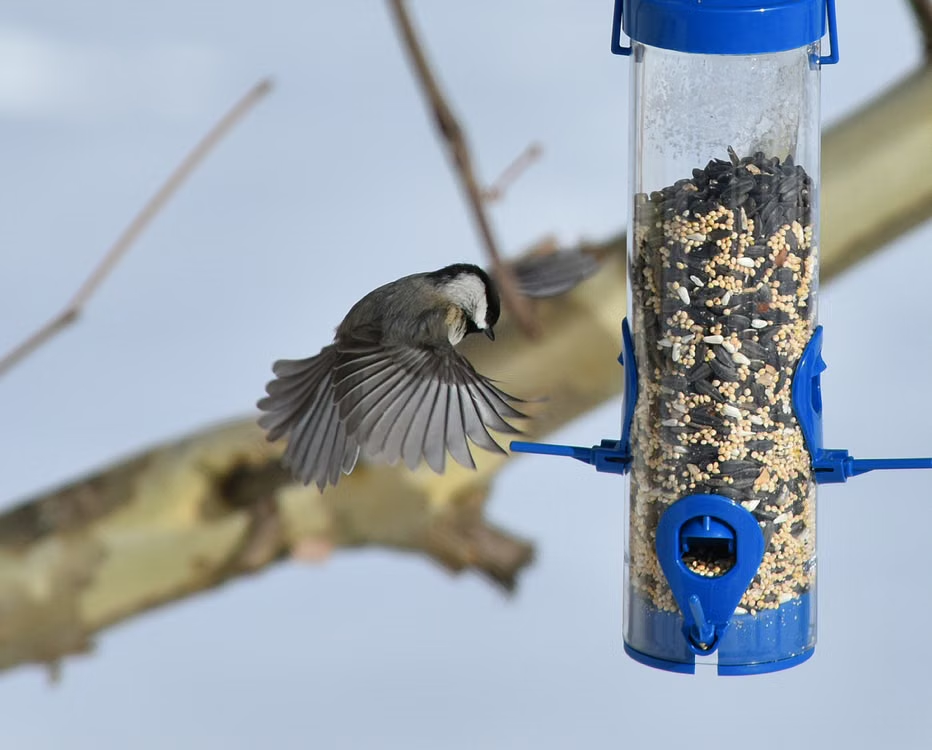
Image source: Bing (Web (fair-use with source credit))
Bird vision is sharp. Many backyard birds are excellent at spotting contrast, shape, and movement. A chickadee landing on a perch, seed hulls on a tray, or finches fluttering around a tube feeder can all draw attention.
Other birds matter too. Once one bold bird investigates, nearby birds often notice the activity. This is especially common with social feeder birds such as chickadees, titmice, goldfinches, sparrows, and house finches.
The Cornell Lab of Ornithology describes birds as active foragers that respond to food, habitat, season, and behavior cues. That matches what you see in real yards. Birds don’t usually appear at random.
They build feeding routes.
| If birds can see… | They’re more likely to… |
|---|---|
| Seed or suet in the open | Fly closer and inspect it |
| Other birds feeding | Trust the spot faster |
| Nearby shrubs or trees | Approach with less hesitation |
| A quiet, consistent feeder | Add it to their daily route |
If your feeder is new, give it time. A few days is common. A few weeks can happen, especially when natural food is easy to find nearby.
Why Your Feeder Setup Changes How Fast Birds Find It
A feeder gets found faster when it looks useful and safe. Birds are always weighing food against risk. If the feeder feels hidden, exposed, noisy, or unsafe, they may ignore it even when the food is good.
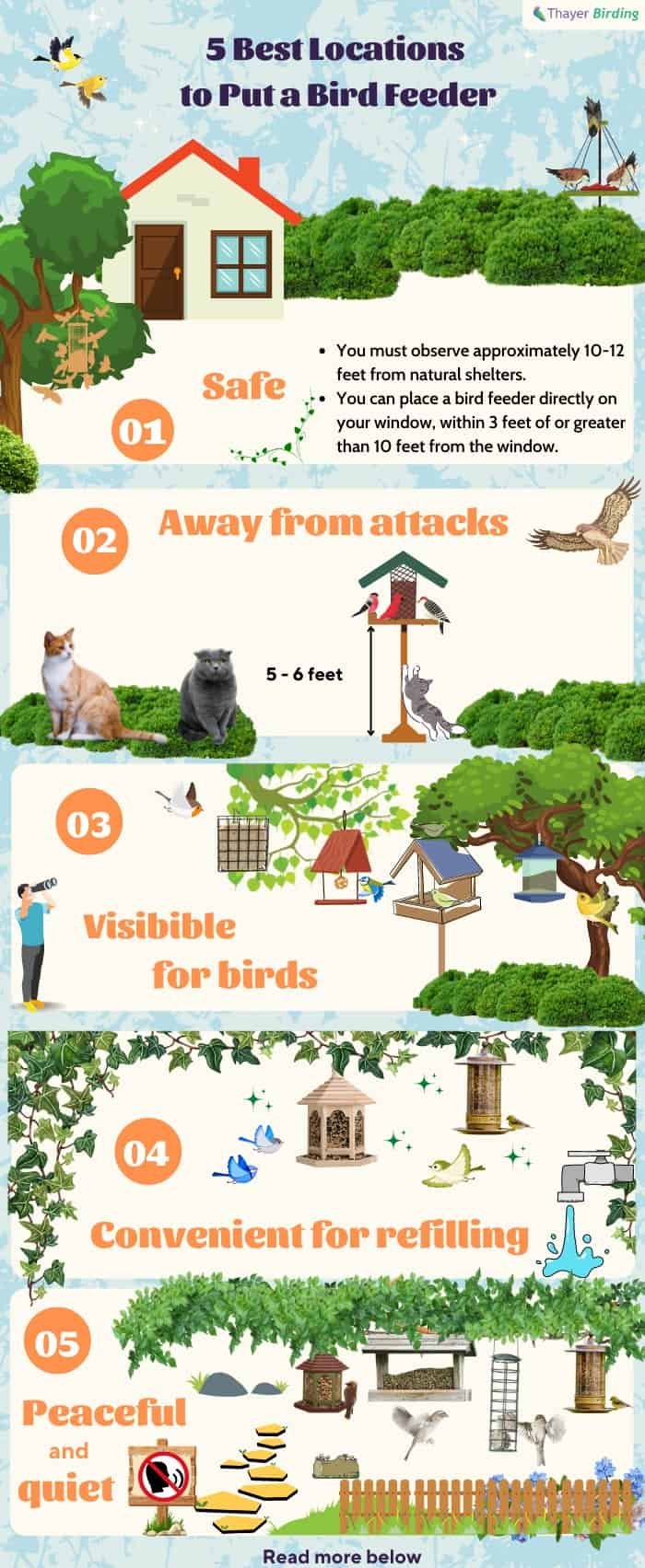
Image source: Bing (Web (fair-use with source credit))
Feeder visibility and placement
If the feeder is tucked behind a wall, under thick branches, or deep on a porch, birds may not notice it. Place it where birds can see it from trees, hedges, fences, roofs, or open flight paths.
A good setup is visible but not stranded. Birds like a clear view of the feeder. They also like a quick escape route if a hawk, cat, or person appears.
Food type and local bird preferences
Food choice affects discovery and repeat visits. Black oil sunflower seed attracts many common North American feeder birds, including cardinals, chickadees, nuthatches, finches, and jays. Nyjer seed is better for goldfinches and some small finches.
Suet attracts woodpeckers, nuthatches, chickadees, and wrens. Platform feeders suit doves, juncos, sparrows, and other ground-feeding birds. Hummingbirds look for nectar feeders and nearby flowers.
For hummingbirds, use plain sugar water at a 1:4 ratio. That means 1 part white granulated sugar to 4 parts water. Skip red dye.
Safe cover, perches, and predator awareness
If the feeder is too far from cover, small birds may avoid it. If it’s buried inside dense shrubs, cats can hide nearby. A practical balance is about 10 feet from shrubs or small trees.
That distance gives birds a quick escape route without creating an easy ambush spot. It also lets them pause, look around, and choose when to land.
Season, weather, and natural food availability
As of 2026, backyard feeding patterns still follow a simple rule. Birds visit more when feeder food is easier or better than what nature offers nearby.
Cold snaps, snow, drought, migration, and late winter can increase feeder use. In late summer or early fall, birds may ignore feeders because wild seeds, berries, and insects are plentiful.
Step-by-Step Workflow to Help Birds Find Your Feeder Faster
If birds haven’t found your feeder yet, don’t keep moving it every day. That resets the learning process. Give local birds a clear, safe, repeatable setup.
Image source: Bing (Web (fair-use with source credit))
Use this simple workflow.
Choose a visible location.
Put the feeder where birds can spot it from trees, shrubs, fences, or open flight paths.Start with high-appeal food.
Use black oil sunflower seed for a broad mix of songbirds. Add suet if woodpeckers are common nearby.Keep the feeder in one place.
Leave it there for at least one to two weeks unless there’s a safety problem.Make the area feel safe.
Place it near cover, but not right beside dense hiding spots for cats.Add water nearby.
A bird bath can make the feeding area more noticeable. Moving water attracts attention even faster.Keep food fresh.
Wet, stale, or moldy seed turns birds away. It can also spread disease.Watch peak feeding times.
Many feeder birds are most active early in the morning and late afternoon.
If you want a gentle starter signal, scatter a small amount of seed on a clean platform tray or bare patch below the feeder. Keep it light and temporary. Too much spilled seed attracts rodents, squirrels, and unwanted mess.
If Birds Still Aren’t Coming: Troubleshooting by Situation
When a feeder stays empty, look at the setup before blaming the birds. Usually, one or two small changes solve the problem.
The feeder is new
If the feeder is new, wait a bit longer. Birds need time to notice it, inspect it, and decide it’s safe. In a bird-friendly yard, discovery may take days.
In a bare or busy yard, it may take weeks.
If nothing happens after two weeks, change one thing. Move it slightly into better view or switch to a higher-appeal food.
The feeder is hidden or too exposed
If birds fly through the yard but don’t land, placement may be the issue. A hidden feeder is easy to miss. A fully exposed feeder can feel risky.
Move it where birds can approach from a shrub, small tree, fence, or trellis. Keep the sightline open enough for them to spot predators.
The food is wrong, stale, or spoiled
If birds visit once and leave quickly, check the food. Cheap seed mixes often contain filler grains that many birds toss aside. Wet seed can clump, sour, or grow mold.
Use fresh seed stored in a dry, sealed container. For nectar feeders, replace sugar water every 1 to 2 days in hot weather.
Squirrels, cats, or dominant birds are taking over
If squirrels own the feeder, smaller birds may give up. Use a squirrel baffle and keep feeders away from easy jumping points. Railings, roofs, and branches can all give squirrels a shortcut.
If cats are nearby, move the feeder. Cats create real danger around feeding sites. The [U.S.
Fish and Wildlife Service](https://www.fws.gov) encourages reducing threats to wild birds, including unsafe feeding conditions and outdoor cat predation.
Birds came once, then disappeared
If birds came and vanished, something changed. The feeder may be empty too often, food may have spoiled, or a predator may be visiting. Natural food may also be abundant for a while.
Check the basics first:
- Is the feeder clean?
- Is the seed dry and fresh?
- Is there cover nearby?
- Are squirrels, cats, or hawks causing pressure?
- Did you move the feeder recently?
Fix the likely issue, then give birds time to rebuild trust. Once they learn your feeder is reliable, they often work it into their daily route.
Common Mistakes That Make Feeders Harder for Birds to Find
The biggest mistake is hiding the feeder too well. Birds need to see it while they’re moving through the yard. If it sits under an eave, behind patio furniture, or in a dark corner, it may never enter their search pattern.
Another common mistake is changing too much too quickly. If you move the feeder every couple of days, birds can’t build a routine around it. If the spot is basically safe, leave it alone long enough for local birds to learn it.
Watch out for these feeder setup problems:
- Wrong food: Many birds ignore filler-heavy seed mixes.
- Wet seed: Damp seed can sour, clump, or grow mold.
- Poor predator setup: Dense shrubs can become cat hiding spots.
- No water nearby: A bird bath can make the whole area more noticeable.
- Dirty feeders: Old seed and droppings can spread disease.
- Random refilling: Empty feeders teach birds to look elsewhere.
If you’re aiming for songbirds, start simple. A clean tube feeder or hopper feeder with black oil sunflower seed is easy for birds to read. A crowded feeding station with too many foods can wait until birds are visiting regularly.
For hummingbirds, don’t rely on red dye. A red feeder part is enough. Fresh nectar matters far more than colored liquid.
Safety, Hygiene, and Long-Term Feeder Success
A good feeder setup doesn’t just attract birds. It keeps them safe enough to return. That means clean food, clean surfaces, safer placement, and fewer predator traps.
Clean seed feeders about every 1 to 2 weeks. Clean them sooner during wet weather or heavy use. For disinfection, many wildlife health groups use a 1:9 bleach-to-water solution, followed by thorough rinsing and complete drying.
Nectar feeders need stricter care. In hot weather, replace sugar water every 1 to 2 days. In cooler weather, every 3 to 5 days is usually workable.
Use this quick maintenance guide:
| Feeder task | Practical schedule |
|---|---|
| Check seed condition | Every few days |
| Clean seed feeder | Every 1 to 2 weeks |
| Replace hot-weather nectar | Every 1 to 2 days |
| Rake spilled seed | Weekly, or sooner if messy |
| Check for mold | Every refill |
If you see sick birds, pause feeding and clean everything. Look for birds that seem fluffed up, weak, crusty-eyed, or unusually easy to approach. Contact your local wildlife agency if illness or dead birds appear.
Window safety matters too. Place feeders within 3 feet of glass or more than 30 feet away. The middle zone can be risky because birds may build up speed before impact.
In bear country, follow local wildlife guidance. Some regions recommend taking feeders down during bear-active seasons. Store seed in sealed, rodent-resistant containers wherever you live.
FAQs About How Birds Find a Bird Feeder
How long does it take birds to find a new feeder?
Birds may find a new feeder in a few days, but two to four weeks can be normal. Timing depends on visibility, food type, season, nearby habitat, and local bird movement. If the feeder is clean, visible, and consistent, patience often works better than constant moving.
Do birds smell bird seed?
Most common feeder birds find seed mainly by sight, not smell. They notice seed, feeder shape, bird movement, and safe landing spots. Some birds have a strong sense of smell, but backyard feeder birds usually rely more on vision and learned feeding routes.
Why did birds stop coming to my feeder?
Birds often stop coming when food spoils, feeders run empty, predators appear, or natural food becomes abundant. Seasonal changes can also shift feeding patterns. Check seed freshness, feeder cleanliness, squirrel activity, cat presence, and whether nearby shrubs or trees still offer safe cover.
Should I scatter seed to help birds find the feeder?
A small amount can help, especially near a new platform feeder or feeding station. Keep it light and temporary. Too much loose seed attracts rodents, squirrels, and mess.
Once birds notice the feeder, stop scattering and let the feeder become the main food source.
What is the best place to put a bird feeder?
The best place is visible, quiet, and near safe cover. Aim for open sightlines with shrubs or small trees nearby, but avoid dense hiding spots for cats. For window safety, place feeders within 3 feet of glass or more than 30 feet away.
Will birds come back if I move the feeder?
Birds can come back after a feeder move, but they may need several days or weeks to adjust. Keep the new spot visible and use the same familiar food. If the old location was popular, move the feeder gradually when possible rather than making one sudden big change.
