Found a baby bird and wondering what to feed young birds without hurting it? You’re not alone. Every spring, thousands of people stumble on a tiny, wide-mouthed chick and have no idea what’s safe.
The wrong food, or the wrong feeding method, can kill a baby bird fast. This guide breaks down what different young birds eat, how to feed them safely, and when to step back and call in a professional instead.
Quick Answer
Most wild baby birds eat soft insects, not bread or milk. Feed small amounts every 15 to 20 minutes for hatchlings. Pet chicks need species-specific hand-rearing formula.
Poultry chicks eat commercial chick starter feed. Always contact a wildlife rehabilitator before feeding a wild bird long-term.
Why Getting This Right Matters More Than You’d Think
A baby bird’s stomach is tiny and unforgiving. One wrong meal, dairy, bread, or an oversized bug, can cause choking, bloating, or organ damage within hours.
Their bodies grow fast, too. A nestling can double its body weight in just a few days. That growth needs the right protein, moisture, and calcium balance, not whatever’s in your kitchen cupboard.
There’s also a legal layer most people miss entirely. In the US, native wild birds are protected by federal law. Feeding or keeping one long-term without a permit can put you on the wrong side of it, even with the best intentions.
Get the basics right, though, and you dramatically improve the bird’s odds of survival. That’s really what this comes down to.
First Things First: Is It a Nestling or a Fledgling?
This matters more than what you feed it. A nestling has few or no feathers and can’t hop or stand well. A fledgling is feathered, alert, and often hopping on the ground with a parent nearby.
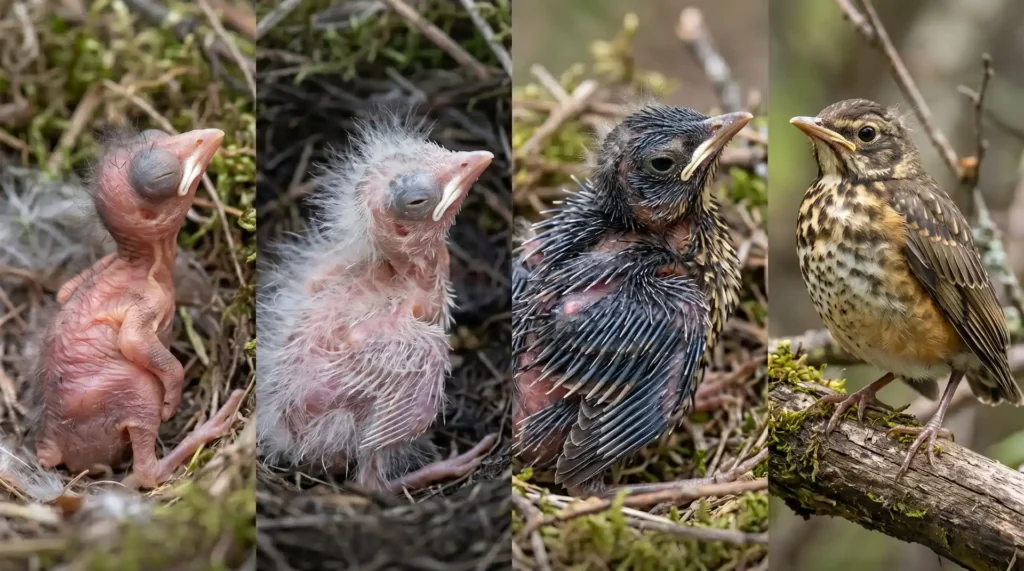
If it’s a nestling, it likely fell from a nest and needs help. Look for the nest nearby and place it back in, if you can safely reach it.
If it’s a fledgling, leave it alone. This is a normal stage of development, and the parents are usually close by, still feeding it.
Here’s a quick way to tell them apart:
| Sign | Nestling | Fledgling |
|---|---|---|
| Feathers | Little to none, pin feathers | Mostly feathered |
| Mobility | Can’t hop or perch | Hops, flutters, short flights |
| Eyes | Often still closed | Open and alert |
| Action needed | Return to nest or call rehabber | Leave alone, monitor from distance |
What Baby Birds Actually Eat (By Type)
What a baby bird eats depends entirely on its species and situation. There’s no single “baby bird food” that works for all of them.
Wild Nestlings and Fledglings
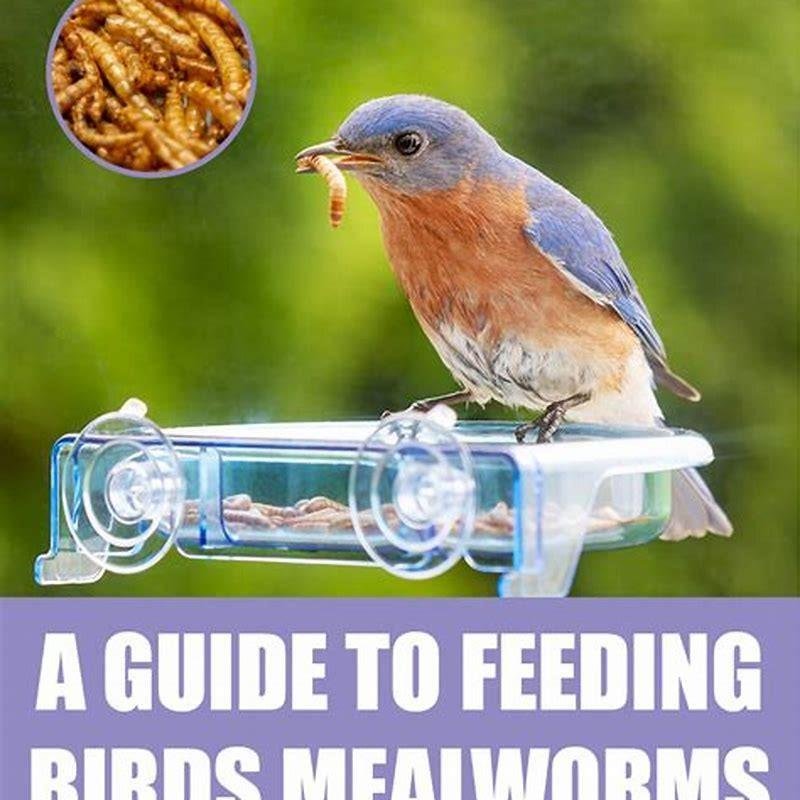
Most wild songbirds are insectivorous as chicks, even species that eat seeds as adults. Soft-bodied insects like mealworms, crickets, and waxworms come closest to their natural diet.
Never feed a wild bird bread, milk, or birdseed straight from a bag. These lack the protein and moisture a growing chick needs.
Pet Chicks (Parakeets, Cockatiels, Parrots)
These need a commercial hand-rearing formula, mixed with warm water to a specific consistency. Follow the manufacturer’s instructions on the packaging for exact ratios and temperature.
Poultry Chicks (Chickens, Ducklings)
Commercial chick starter feed covers their nutritional needs completely. Ducklings need a niacin-boosted starter, since standard chick feed often falls short for them.
Foods That Can Seriously Harm a Baby Bird
Some common kitchen foods are genuinely dangerous for young birds. Their digestive systems can’t process what ours can.

Avoid these completely:
- Bread and crackers (empty bulk, no real nutrition)
- Milk or dairy (birds can’t digest lactose properly)
- Avocado (toxic to most bird species)
- Salted or seasoned foods (damages kidneys)
- Chocolate and caffeine (toxic even in small amounts)
- Whole, hard seeds for hatchlings (choking risk before the beak develops)
If you’re unsure whether something’s safe, don’t guess. The U.S. Fish and Wildlife Service offers guidance on wild bird care, and your nearest rehabilitator can answer species-specific questions fast.
How to Feed a Baby Bird Safely (Step-by-Step)
If you’ve confirmed the bird needs help and can’t reach a rehabilitator right away, follow these steps.
- Warm the bird first. A cold bird can’t digest food properly, so tuck it in a small box with a soft cloth over a heating pad set to low.
- Prepare the right food. For wild insectivorous birds, use soft mealworms or crickets with legs and hard shells removed.
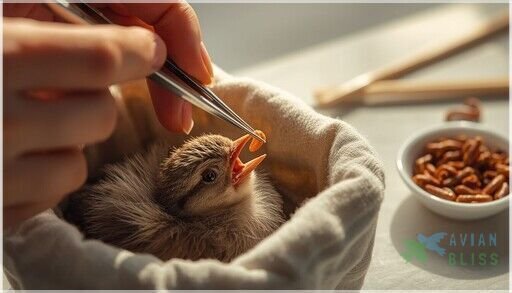
- Use blunt tweezers or a small syringe. Offer tiny pieces, about the size of the bird’s own beak tip.
- Feed at the right interval. Hatchlings need food every 15 to 20 minutes during daylight. Older nestlings can go 30 to 45 minutes between feedings.
- Watch the crop, the pouch at the base of the neck. Feed again once it’s empty, not before.
- Offer water carefully. Never pour water down a bird’s throat. A few drops near the beak’s edge is plenty, if it seems thirsty.
| Feeding Stage | Frequency | Food Type |
|---|---|---|
| Hatchling (no feathers) | Every 15 to 20 min | Soft insects, formula |
| Nestling (pin feathers) | Every 30 to 45 min | Soft insects, small amounts |
| Fledgling (feathered) | Every 1 to 2 hours | Larger insects, seeds if species-appropriate |
Stick to daylight hours only. Wild parent birds don’t feed chicks at night, and neither should you.
Mistakes People Make (And Why They’re Dangerous)
Most bird-feeding mistakes come from good intentions, not carelessness. Here’s what trips people up most often.
- Feeding too fast. Cramming food in causes aspiration, where food enters the airway instead of the stomach.
- Using cow’s milk. Birds have no enzyme to break down lactose, so it just causes digestive upset.
- Skipping the warm-up step. A cold bird’s gut shuts down, so food just sits there and rots.
- Guessing the species. A robin’s diet isn’t a pigeon’s diet, and getting it wrong can cause deficiencies fast.
- Keeping the bird too long. Even with good intentions, prolonged home care without expertise lowers survival odds.
- Overhandling. Too much contact stresses the bird and can trigger imprinting in wild species.
Small course corrections early on make a real difference to outcomes.
Expert Tips for Feeding Young Birds Safely
A few habits separate a bird that thrives from one that struggles. These come up repeatedly in rehabilitator guidance and aggregate wildlife care resources.
Keep feeding tools clean between uses. Bacteria builds up fast on wet tweezers or syringes, and a young bird’s immune system can’t fight off much.
Vary the insect diet slightly for a wild nestling in short-term care. Mealworms alone lack calcium, so rehabilitators often dust them with a calcium supplement or rotate in waxworms and small crickets.
Watch the droppings. Healthy droppings are firm with a white cap. Watery or discolored droppings usually mean the diet or schedule needs adjusting, and that’s a sign to call a rehabilitator sooner.
Keep noise and handling to a minimum. Stress alone can suppress a young bird’s appetite, even when the food is exactly right.
Safety and Legal Considerations When Helping Wild Birds
Handling a wild bird isn’t just a feeding question. It’s a legal one too, especially in the US.
Under the Migratory Bird Treaty Act, most native wild bird species are federally protected. Keeping one long-term without a permit is against the law, even with good intentions.
Short-term care while you arrange transport to a rehabilitator is generally accepted practice. Just don’t plan on raising a wild bird at home as a pet.
There’s a health angle too. Wild birds can carry parasites or bacteria transmissible to humans. Wash your hands thoroughly after handling any wild bird, and avoid touching your face in between.
Pet and poultry chicks don’t carry the same legal restrictions, but hygiene still matters. Salmonella risk from poultry chicks is well documented, so the same handwashing rule applies there too.
When to Call a Wildlife Rehabilitator Instead
Call a rehabilitator immediately if the bird is injured, bleeding, or was caught by a cat or dog. Cat saliva carries bacteria that can kill a bird within 24 to 48 hours, even without visible wounds.
Also call if you can’t identify the species, or if it’s a nestling with no nest in sight. Rehabilitators have the training, formula, and permits that home care simply can’t match.
Your state’s fish and wildlife agency usually keeps a referral list, and many university extension programs and local vet clinics do too. Don’t feel like you’ve failed by handing the bird over. Getting a young bird to an expert quickly is often the best thing you can do for it.
Final Recommendation: What to Do If You Find a Baby Bird
If you’ve found a young bird, work through it step by step. Confirm whether it’s a nestling or fledgling first. That single decision shapes almost everything else you do next.
If it’s a nestling, keep it warm, offer small amounts of species-appropriate food, and contact a rehabilitator as soon as you can. If it’s a fledgling, step back and let its parents keep doing their job.
For pet chicks and poultry, stick to the correct commercial formula or starter feed, follow the feeding schedule closely, and watch for changes in appetite or droppings. When in doubt on any front, a quick call to a rehabilitator or an avian vet beats guessing every time.
Frequently Asked Questions
What do baby birds eat in the wild?
Most wild baby songbirds eat soft insects like caterpillars, crickets, and mealworms. Parent birds carry these directly to the nest. Even seed-eating adult species usually feed their chicks insects first, since chicks need more protein to grow.
Can I feed a baby bird bread or milk?
No, never feed a baby bird bread or milk. Bread has no real nutrition and fills the stomach with empty bulk. Milk causes digestive upset since birds can’t process lactose properly.
How often should I feed a baby bird?
Hatchlings need feeding every 15 to 20 minutes during daylight. Older nestlings can go 30 to 45 minutes between feedings. Fledglings need food roughly every 1 to 2 hours until they’re independent.
Is it legal to keep a wild baby bird at home?
In the US, most native wild birds are protected under federal law. Keeping one long-term without a rehabilitation permit is illegal. Short-term care while arranging rehabilitator transport is generally accepted.
How do I know if a baby bird needs my help?
A featherless or barely feathered nestling on the ground usually needs help. A feathered fledgling hopping nearby with a parent watching does not. When in doubt, observe from a distance for 30 to 60 minutes before intervening.
