If you’ve noticed fewer birds visiting your feeder lately, a dirty feeding station might be the reason. Knowing how to clean a bird feeder properly isn’t just about tidiness. It’s about stopping disease from spreading among the birds you’re trying to help.
A grimy feeder can turn into a breeding ground for mold, bacteria, and parasites in just days.
Wildlife health researchers link contaminated feeders to seasonal outbreaks of salmonellosis and conjunctivitis in songbirds. The U.S. Centers for Disease Control and Prevention recommends cleaning feeders at least every two weeks, more often in wet weather.
As of 2026, that guidance still holds, though rising outbreak reports have pushed some experts toward weekly cleaning in busy yards. Here’s exactly how to do it right, feeder by feeder.
Quick Answer
Clean a bird feeder every one to two weeks. Empty old seed first. Scrub with hot water and a stiff brush.
Soak in a diluted bleach solution for 10 minutes. Rinse well and dry completely before refilling.
Why Dirty Bird Feeders Are Making Your Backyard Birds Sick
Bird feeders pull lots of birds into one small space. Great for watching them. Also perfect for spreading illness.
Wet seed and old hulls turn moldy fast. Mold spores can trigger aspergillosis, a lung infection that’s often fatal in wild birds.
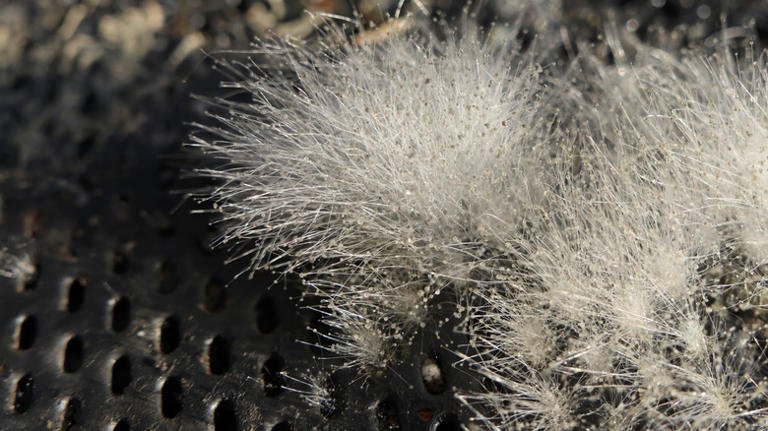
Droppings build up on perches and feeding ports too. That’s how salmonellosis spreads between birds sharing the same surfaces.
House finches and other songbirds are especially prone to avian conjunctivitis, an eye disease that spreads through contact with contaminated feeders. Birds with swollen, crusty eyes struggle to spot predators or find food.
The Centers for Disease Control and Prevention has documented salmonella outbreaks tied directly to backyard feeders. Crowded winter feeders make it worse, since more birds touch the same surfaces every day.
None of this means you should stop feeding birds. It means cleaning has to be routine, not an afterthought.
How Often You Actually Need to Clean, Based on Feeder Type and Season
Cleaning frequency depends on what you’re feeding, the weather, and how many birds show up.
Running a hummingbird feeder in summer heat? Nectar can ferment within two days. Clean it every two to three days once temperatures climb past 80°F.
Using a standard seed feeder? Every one to two weeks works fine in normal conditions. If it rains for several days straight, clean it sooner, since wet seed molds fast.
| Feeder Type | Normal Frequency | High-Risk Conditions |
|---|---|---|
| Tube/Hopper (seed) | Every 1-2 weeks | Every 3-4 days if wet |
| Hummingbird | Every 3-4 days | Every 2 days in heat above 80°F |
| Suet cage | Every 1-2 weeks | Weekly if suet melts or drips |
| Platform/tray | Weekly | Every 3-4 days (droppings collect fast) |
If your state wildlife agency reports an active disease outbreak in your area, clean everything weekly regardless of type. When in doubt, clean sooner rather than later.
Choosing the Right Cleaning Method for Your Feeder Material
Not every feeder gets cleaned the same way. Material and design change what tools and solutions work best.
Tube, Hopper, and Platform Feeders
These handle a diluted bleach soak well if they’re plastic or metal. Mix one part bleach to nine parts water, soak 10 minutes, then rinse thoroughly.
Wooden hopper feeders are trickier. Skip the soak. Wipe them down instead, since wood absorbs bleach and can warp or hold onto residue.
Suet Cages and Feeders
Suet residue gets greasy fast. Use hot water and dish soap first to cut through the grease, then follow with a bleach rinse if the cage is metal.
Hummingbird Feeders (No-Soap Rule)
Never use soap on hummingbird feeders. Residue left behind can be toxic to hummingbirds and disrupt the way they taste nectar.

Instead, soak parts in a mix of one part white vinegar to four parts hot water. Scrub with a bottle brush, then rinse until you can’t smell vinegar anymore.
Step-by-Step: The Full Cleaning Workflow From Disassembly to Refill
Here’s the process that works for most feeder types, start to finish.
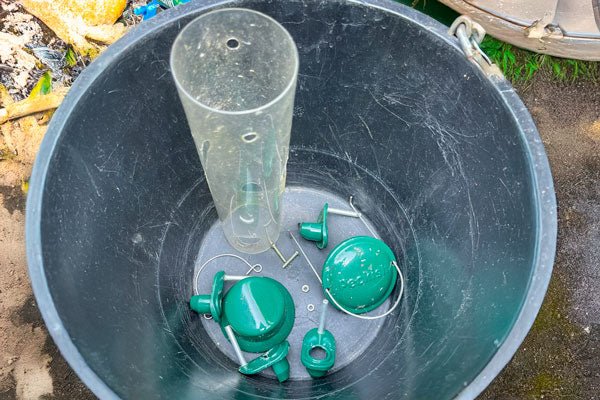
- Take the feeder apart completely. Remove trays, lids, and perches.
- Dump out old seed, hulls, or leftover nectar.
- Dry-brush loose debris off every surface.
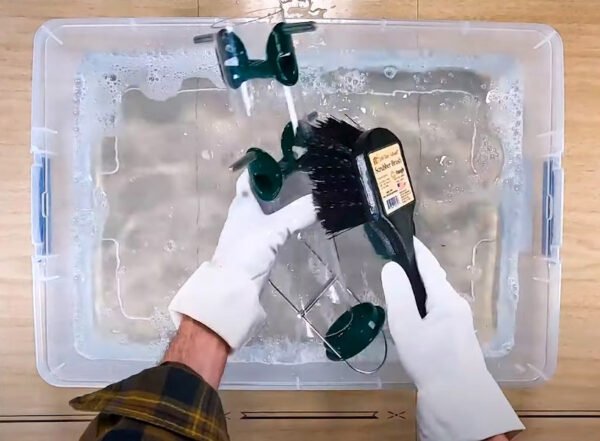
- Soak parts in your bleach or vinegar solution for 10 minutes.
- Scrub feeding ports and corners with a bottle brush or old toothbrush.
- Rinse every part under running water until no residue or smell remains.
- Air-dry completely. This usually takes a few hours, sometimes overnight.
- Reassemble once fully dry, then refill with fresh seed or nectar.
Never refill a feeder that’s still damp. Trapped moisture is exactly what starts the next mold cycle.
Mistakes That Turn a Clean Feeder Back Into a Bacteria Trap
Even well-meaning cleaning routines go wrong in a few predictable ways.
- Rinsing quickly without scrubbing feeding ports, where residue hides
- Refilling while parts are still wet, trapping moisture inside
- Using dish soap on hummingbird feeders instead of the vinegar method
- Skipping the ground below the feeder, where dropped seed and droppings pile up
- Cleaning only the outside while ignoring perches and seed channels
- Reusing the same brush for hummingbird and seed feeders without rinsing between uses
- Waiting until the feeder looks dirty instead of sticking to a schedule
Most of these come down to rushing. A feeder that looks clean isn’t always clean where it counts: inside the ports and seams birds actually touch.
Safe Handling: What CDC and Wildlife Agencies Want You to Know
Handling moldy feeders or bird droppings carries real health risk to you, not just the birds. Wear disposable gloves any time you’re scrubbing a feeder that’s been sitting dirty for weeks.
Work outside or in a well-ventilated space when using bleach solutions. Bleach fumes mixed with poor airflow can irritate your lungs, especially indoors.
Wash your hands thoroughly after cleaning, even if you wore gloves. Salmonella and other bacteria can transfer from surfaces to your hands without you noticing.
If you spot multiple sick or dead birds near your feeder, stop feeding for a while. Take the feeder down, clean it thoroughly, and report the incident to your state wildlife agency.
The USGS National Wildlife Health Center tracks disease outbreaks in wild bird populations across the country. Their data has repeatedly linked feeder crowding to faster disease spread during outbreak periods.
If your region is under an active outbreak alert, some agencies recommend removing feeders entirely for two to four weeks. That gives sick birds time to disperse instead of congregating around a shared food source.
Keep a separate bucket and brush set specifically for feeder cleaning. Don’t cross-use them for kitchen dishes or other household cleaning tasks.
Building a Cleaning Routine That Actually Sticks
Set a recurring reminder rather than relying on memory. Every two weeks works for most seed feeders, so pick a day and stick with it.
If you run multiple feeders, stagger their cleaning schedule instead of doing them all at once. Clean two or three at a time so the others stay available for feeding while you work.
Keep a small cleaning kit ready to go. A bottle brush, a bucket, and your bleach or vinegar solution should live somewhere easy to grab.
Track weather patterns too. After heavy rain or a humid stretch, move your cleaning day earlier instead of waiting for the scheduled date.
Rotate hummingbird feeders more aggressively in summer. Some households keep a backup feeder so one can soak and dry while the other stays up and full.
Small habits keep this manageable. A quick seed dump and dry-brush every few days between full cleanings cuts down on buildup significantly.
Frequently Asked Questions
How do I know if my bird feeder needs cleaning?
Look for visible mold, slimy residue, or clumped wet seed inside the feeder. A sour smell or discolored buildup around feeding ports also signals it’s overdue for a clean.
Can I use dish soap to clean a bird feeder?
Yes, for seed and suet feeders, mild dish soap works fine alongside a bleach rinse. Never use soap on hummingbird feeders, since residue can be toxic to hummingbirds.
What’s the best bleach ratio for cleaning bird feeders?
Mix one part bleach to nine parts water for most feeders. Soak parts for about 10 minutes, then rinse thoroughly until no bleach smell remains.
How long should a bird feeder dry before refilling?
Let it air-dry completely, which usually takes a few hours to overnight. Refilling while damp traps moisture and encourages mold growth almost immediately.
Is it safe to clean a bird feeder in the kitchen sink?
It’s better to avoid it. Bird droppings can carry salmonella, so cleaning feeders outside or in a utility sink keeps that bacteria away from food prep areas.
